




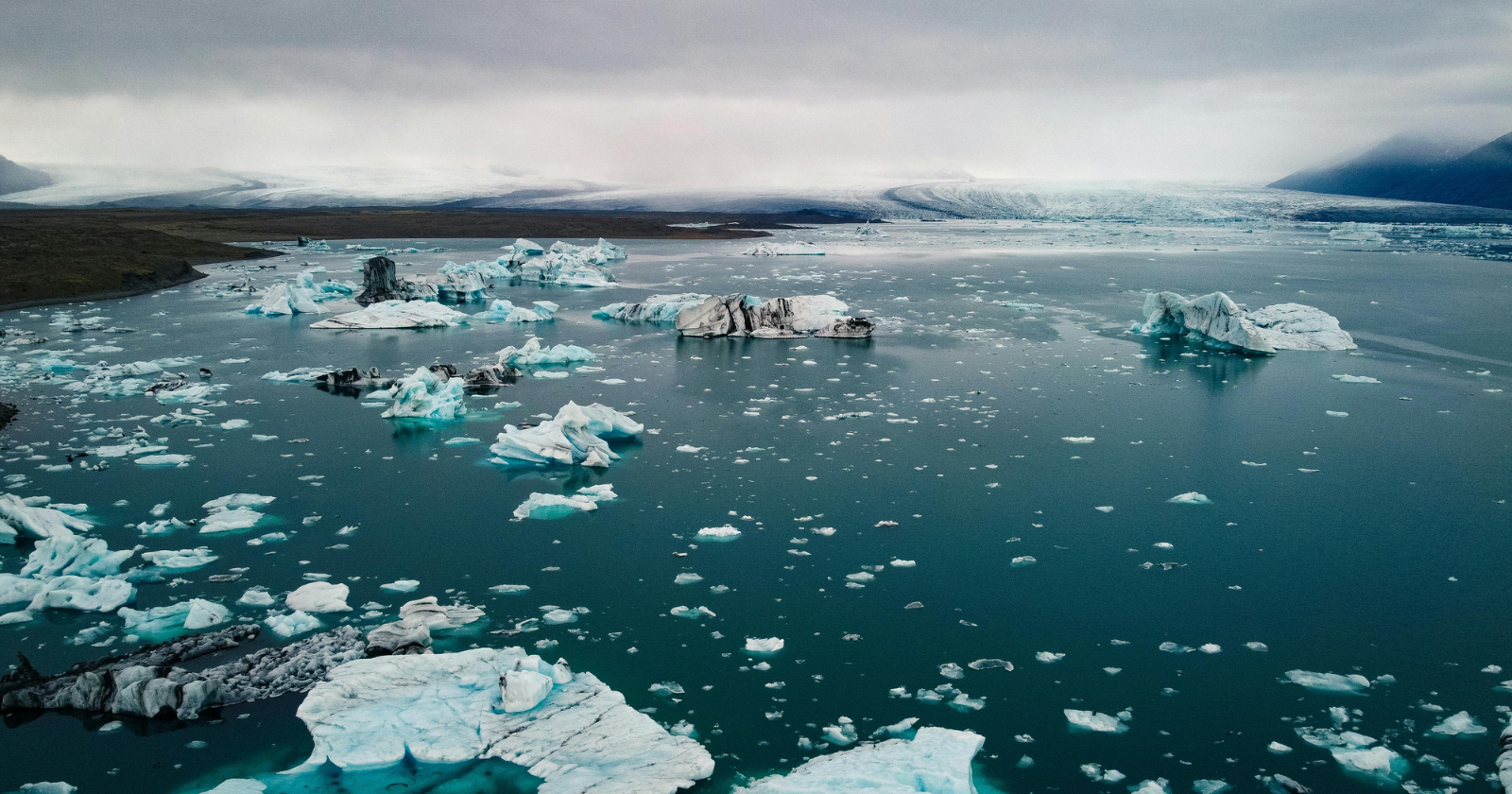
The Arctic Ocean has remained frozen every summer throughout the entire recorded history of modern human civilization. That foundational fact is about to change. A growing body of scientific evidence suggests that most people alive today will witness the complete disappearance of Arctic sea ice during summer months, an event that has not occurred for 115,000 years.
The last time the Arctic was seasonally ice-free was during the Eemian period, approximately 115,000 to 130,000 years ago. At that time, global temperatures were warm enough to melt all summer sea ice in the Arctic Ocean. Modern humans were still in Africa and had not yet migrated across the globe. Since then, Arctic ice has persisted through every summer, forming the permanent backdrop to human civilization across the Northern Hemisphere.
Today, that permanence is ending. Satellite measurements over the past few decades show Arctic summer sea ice shrinking at an accelerating rate. Scientists measure this by tracking how much ice survives the summer melt season each year. The trend is unmistakable: less ice remains at the end of summer with each passing decade. The fundamental cause is rising global temperatures driven by greenhouse gas emissions. The Arctic is warming roughly twice as fast as the global average, a phenomenon called Arctic amplification.
The mechanism is straightforward but consequential. Sea ice reflects sunlight back into space, helping keep the planet cool. When ice melts and exposes dark ocean water underneath, that water absorbs heat instead of reflecting it. This creates a feedback loop: less ice leads to more warming, which causes more ice to melt. This cycle accelerates the transition to a seasonally ice-free Arctic.
The consequences ripple across ecosystems and human communities. Marine animals like polar bears and seals depend on sea ice for hunting and survival. Populations of these species are already showing signs of stress as ice coverage shrinks. Indigenous communities across the Arctic have built their cultures, economies, and ways of life around the ice for thousands of years. Rapid loss of sea ice disrupts these established patterns and forces difficult adaptations. Climate scientists also warn that Arctic changes influence weather systems thousands of miles away, potentially affecting precipitation and temperature patterns in regions including Asia and India.
Based on current warming rates and climate models, scientists estimate that a seasonally ice-free Arctic summer could arrive within the next two to four decades. This would represent a fundamental shift in Earth’s climate system, ending a pattern that has held throughout the entire existence of modern humans as a species. The change would be visible and measurable within the lifetime of people currently in school.
Source: Space Daily