




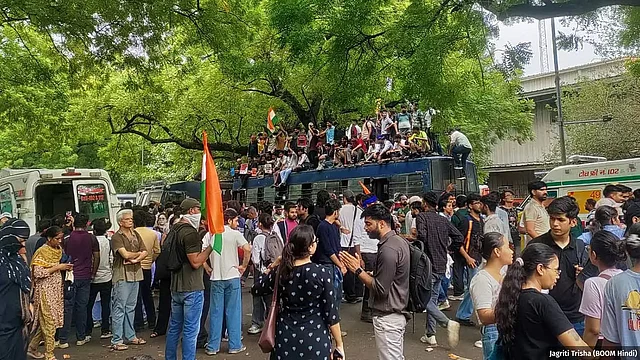
The Prime Minister announced on July 23 that the government would establish fast-track courts to handle exam paper leak cases, citing the importance of protecting students’ futures. The announcement followed three days of student protests at Delhi’s Jantar Mantar, which ended in police action involving baton charges and tear gas. Some protesters reported injuries and alleged the use of pellet guns, claims police denied.
However, on the same day as the Prime Minister’s announcement, the Union government informed the Rajya Sabha that India’s existing fast-track court system is already overwhelmed. By April 2026, the 775 fast-track special courts operating across the country had accumulated 2,49,000 pending cases. This figure includes 398 courts set up exclusively under the Protection of Children from Sexual Offences (POCSO) Act to handle child sexual abuse cases.
Exam paper leaks have become a recurring problem in India’s competitive examination system. Multiple breaches have forced the National Testing Agency to cancel or postpone major tests, affecting thousands of aspirants and damaging public confidence in the system. Student anger is grounded in real harm: careers delayed, repeated attempts at exams, and uncertainty about fair competition. Accountability matters, and students are right to demand it.
But the scale of existing backlog raises a practical question about capacity. Fast-track courts were originally created to handle serious cases more quickly than regular courts. Instead, they have accumulated nearly 2.5 lakh pending cases. Adding new courts for paper leak cases means distributing scarce judicial resources even more thinly. Courts handling child sexual abuse cases already face massive delays, yet they are part of the same constrained system.
Fast-track courts require judges, support staff, courtrooms, and case management systems. Creating new courts without increasing these resources simply creates new backlogs under a different name. The real measure of the government’s commitment will not be the number of courts announced but the number of cases actually resolved within a reasonable timeframe.
The student movement has forced accountability into the conversation. But solving the exam leak problem sustainably requires addressing both the leak itself and the judicial capacity to punish it fairly. Announcements alone will not deliver either.
Source: Newslaundry