




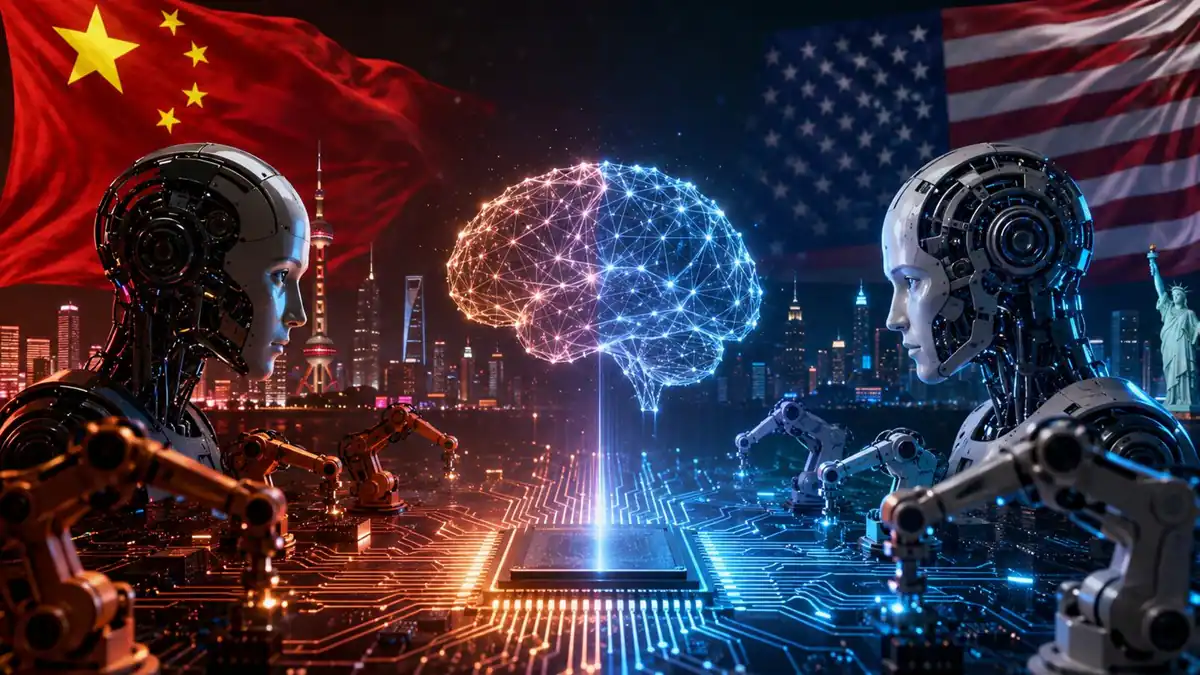
China’s artificial intelligence companies are releasing powerful AI models for free or at very low cost, forcing American companies to reconsider their business strategy. Alibaba’s Qwen team has made its most advanced model, Qwen Max, available to developers without keeping it locked behind paid API access. DeepSeek, another Chinese AI company, released V4-Flash, a faster version of its model that costs significantly less than competing American products.
This shift matters because AI models have become central to how software works. Companies like OpenAI, Google, and Anthropic in the US have built their business by charging developers to use their best models through APIs, which are digital connections that let software talk to each other. When Chinese competitors give away similar or better models free or cheap, it changes the entire pricing landscape. Developers in startups and enterprises now have choices they did not have before.
The move reflects a larger strategy by Chinese AI companies. Instead of competing primarily on price and features like American companies do, Chinese firms are using free or nearly-free models to build market dominance. By letting developers use Qwen Max and V4-Flash without paying, these companies are creating a user base that will be harder to displace later. This approach worked in other tech markets where Chinese companies entered late but captured share through aggressive pricing.
American AI makers are watching this carefully. OpenAI charges for access to GPT-4. Google charges for Gemini API calls. Anthropic charges for Claude. These revenue models depend on developers accepting that advanced AI is worth paying for. If Chinese models become good enough and free enough, developers might stop paying for American ones. Some American companies have already begun lowering prices or offering more generous free tiers in response.
The broader context shows how AI development is splitting into different models. American companies invested heavily upfront and expect to recover that cost through licensing fees. Chinese companies, often backed by government incentives or tech giants like Alibaba, can afford longer timelines to profitability. This creates two different competitive paths: paid premium access versus free or cheap widespread availability.
What happens next will likely determine who controls the AI infrastructure that powers the next generation of software. If free Chinese models prove reliable enough for most developers, American companies will face pressure to change their entire business model. If American models remain superior enough to justify their cost, pricing will stabilize but at lower levels than before. For now, the market is in motion.