



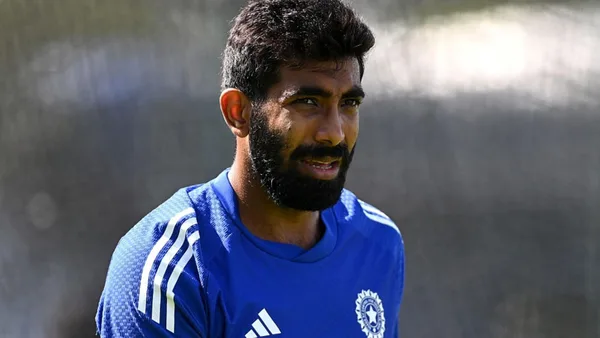
Every time Jasprit Bumrah returns from an injury, another question follows close behind: Why does this keep happening?
The latest setback, a knee injury that has ruled him out of India’s Test tour of Sri Lanka, has once again put the spotlight on the fast bowler’s fitness. Since 2019, Bumrah has battled stress fractures, abdominal strains, recurring back problems, back surgery and now a knee injury. For India, losing their premier fast bowler has almost become a recurring challenge.
The answer, however, is more complex than simply saying Bumrah is “injury-prone.”
A unique action comes with unique demands
From the start of his international career, Bumrah’s unusual bowling action has attracted as much attention as his wickets.
Unlike most fast bowlers, he generates pace with a short, stuttering run-up rather than building momentum over a long approach. Much of the force comes from his explosive delivery stride, rapid arm speed and body mechanics.
Former India captain Kapil Dev had warned as early as 2019 that Bumrah’s action could make him more susceptible to injuries because it places greater stress on certain parts of the body than more conventional bowling actions.
That action is also what makes Bumrah so difficult to face. It creates awkward angles, late movement and deceptive pace. Changing it significantly could reduce the very qualities that make him one of the world’s best bowlers.
The workload factor
Technique is only one part of the story.
Since returning from back surgery in 2023, Bumrah has carried India’s pace attack across formats. During the 2024-25 Border-Gavaskar Trophy, he bowled more than 150 overs, often shouldering the responsibility almost single-handedly as injuries affected the rest of the pace attack.
The trend continued in England and again in 2026, with India repeatedly relying on him to deliver long spells whenever breakthroughs were needed.
Former bowling coach Morne Morkel also highlighted another challenge during the England tour, pointing to the short gap between the IPL and long Test series, leaving little time for fast bowlers to rebuild their workloads before returning to red-ball cricket.
There is no simple solution
Modern sports science can manage workloads, but it cannot eliminate risk, especially for fast bowlers.
Bumrah’s action, combined with the physical demands of international cricket and India’s dependence on him, creates a difficult balancing act. Every time he returns, India must decide not only how many matches he should play but also how many overs he should bowl.
His recurring injuries are therefore not the result of one problem. They are the product of a unique bowling action, an enormous workload and the unforgiving nature of fast bowling itself. For India, the challenge is no longer just getting Bumrah fit. It is ensuring the world’s best fast bowler stays fit long enough to decide the matches that matter most.