



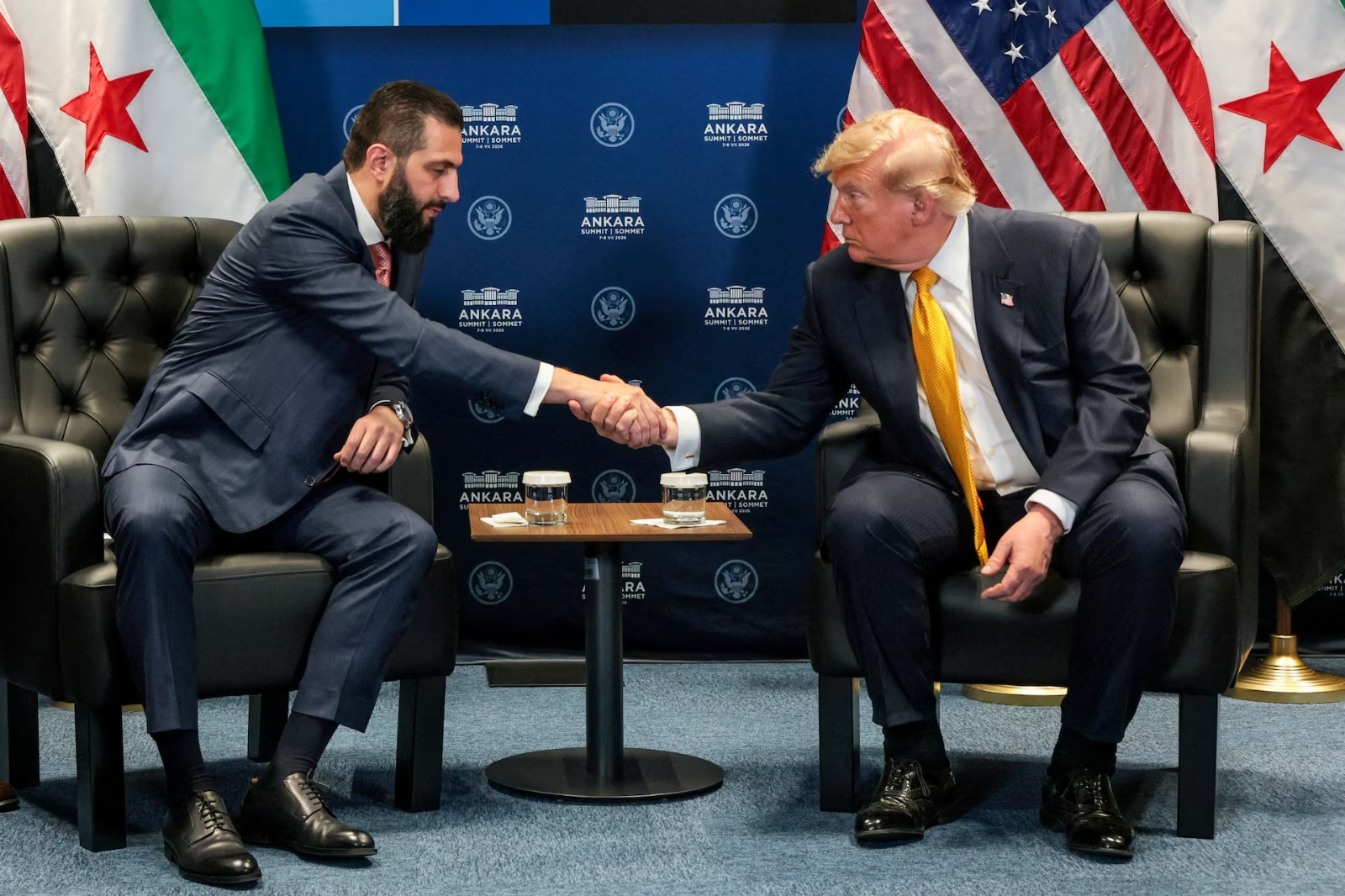
The Trump administration has removed Syria from its official list of countries that sponsor terrorism, a dramatic shift in US foreign policy that reflects Washington’s decision to engage diplomatically with Syria’s new government. The move comes as the Trump team has moved quickly to embrace Syria’s new president, Ahmed al-Sharaa, despite his history as a militant fighter who previously aligned with al-Qaeda-linked groups during Syria’s civil war.
Syria has held the terrorism designation since 1979, when the country was seen as a Cold War opponent allied with the Soviet Union. That status carried serious practical consequences: it blocked American aid to Syria, froze Syrian assets held in US banks, and made it illegal for US companies to conduct business with Syrian entities. The removal of this designation opens the door to potential economic engagement and reconstruction support if the Trump administration chooses to pursue it.
Al-Sharaa’s path to power was swift and militarily decisive. His armed group captured Syria’s capital Damascus in December 2024, forcing longtime president Bashar al-Assad to flee the country and end a government that had ruled for more than five decades. Before this military victory, al-Sharaa spent years fighting in Syria’s civil war, including periods when he led forces aligned with groups connected to al-Qaeda, though he has since repositioned himself as separate from that extremist network.
The Trump administration’s decision to remove Syria from the terrorism list reflects a calculation that diplomatic engagement can better serve US interests than continued isolation and sanctions. Officials argue that opening channels to Syria’s new government creates opportunities to push al-Sharaa away from relationships with Iran, Hezbollah, and other militant actors that operated inside Syria for decades. This engagement strategy represents a complete departure from the Biden administration’s approach, which maintained strict penalties on Syria.
Yet the policy faces significant criticism. Lawmakers and human rights organizations question whether removing the designation is premature given al-Sharaa’s own militant background and the absence of concrete commitments from Syria’s new government on counterterrorism, political reform, or protection of minorities. They argue that Syria should demonstrate genuine change before receiving this kind of diplomatic recognition.
Syria’s current situation remains fragmented. While the new government controls Damascus, the country is divided among multiple armed groups and occupying forces. Turkey controls parts of northern Syria. Kurdish forces hold the northeast. This fragmentation raises questions about how much authority al-Sharaa’s government actually exercises and how sustainable his hold on power will prove.
Source: BBC World News