



ODI cricket has become faster without necessarily becoming easier for batters. Since the Covid-19 pandemic, scoring rates have remained above five an over, yet batting averages have fallen sharply compared with the previous World Cup cycles. The ICC’s latest ball rule has played a part in that shift, and it has also exposed a weakness in India’s pace attack.
In July 2025, the ICC changed the ODI playing conditions so that two new balls are used for the first 34 overs, after which the fielding side chooses one ball for the remaining 16. The change effectively gives one ball a chance to become 33 overs old, bringing reverse swing and conventional wear back into the latter stages of an innings.
The impact on the wider game is already visible.
According to the data provided, teams scored at 5.54 runs per over in 2023, the first calendar year in which men’s ODIs crossed 100,000 aggregate runs. Yet batting averages have declined from 32.91 in 2015 and 33.36 in 2019 to 28.23 since 2021.
The shift is particularly noticeable after the 34th over. Teams have averaged 80.20 runs in overs 35-50 since the rule change, compared with 86.14 between 2012 and 2020.
For top-10 ODI nations, pacers have also become more effective in this phase. Their average has improved from 26.3 before the change to 24.8 since July 2025, with economy dropping from 7.5 to 7.2.
India has moved in the opposite direction.
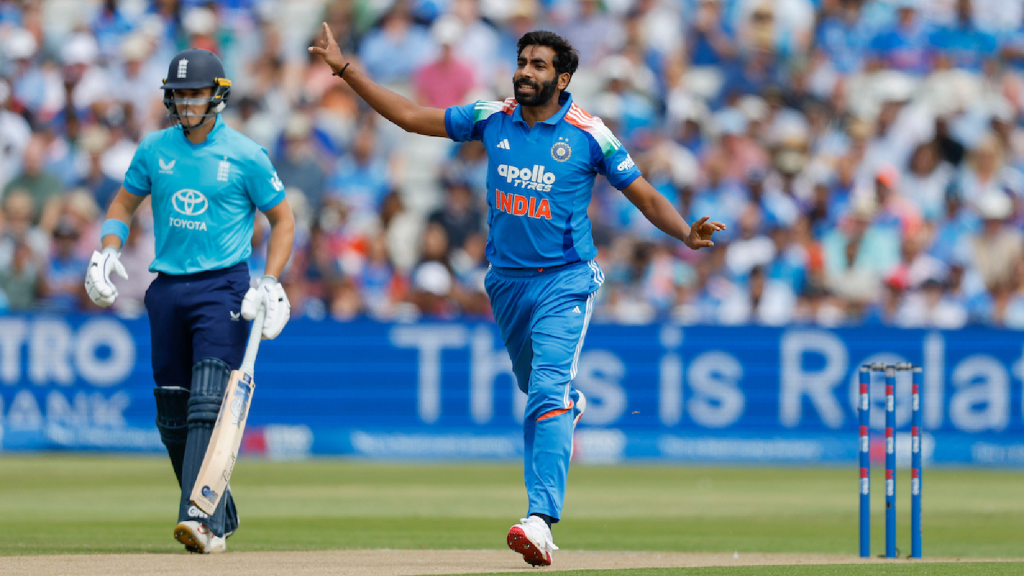
Before the rule change, Indian pacers averaged 23.5 in overs 35-50 and conceded at 6.9 an over. Since July 2, 2025, those figures have deteriorated to 32.1 and 7.9 respectively. Their wickets per dismissal have also fallen, with 27 wickets coming at 24.4 balls per wicket compared with 20.4 previously.
The problem is not simply a lack of pace options. India have used nine seamers across 15 ODIs since the change, suggesting that the attack is still searching for the right combination.
Jasprit Bumrah has played two matches in this phase without taking a wicket, while Mohammed Siraj has three wickets in four games. Harshit Rana and Gurnoor Brar have both conceded at more than eight an over. Arshdeep Singh has taken six wickets at below seven an over, while Prasidh Krishna leads the group with eight wickets, although his economy has been 8.78.
India has 14 ODIs scheduled over the next four months. With the 2027 World Cup approaching, those matches offer a crucial window to work out who can make the older ball a weapon rather than a problem.