



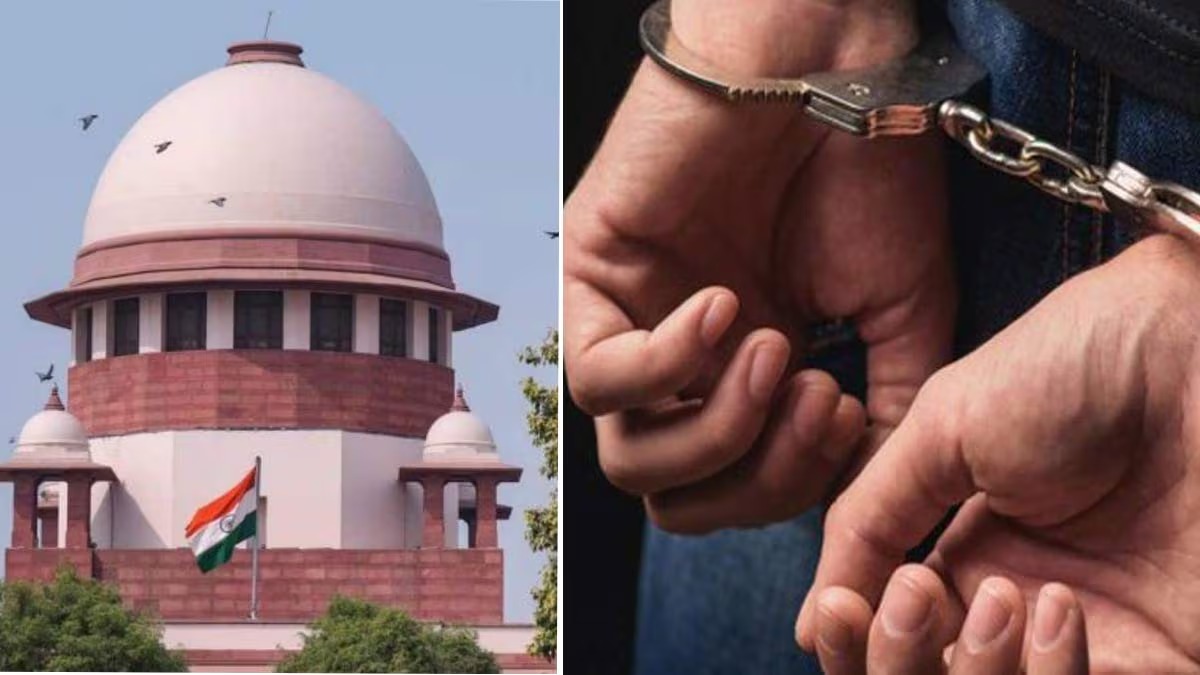
The Supreme Court has ruled that the constitutional 24-hour deadline for producing an arrested person before a magistrate begins when the person is first detained, not when the police formally record the arrest.
A bench of Justices Ujjal Bhuyan and Atul S Chandurkar said that treating detention and formal arrest as separate periods would undermine the safeguard under Article 22(2) of the Constitution.
The provision requires every person arrested and detained in custody to be produced before the nearest magistrate within 24 hours, excluding only the time reasonably required for travel from the place of arrest to the court.
“The view that 24 hours begin only from the formal arrest is contrary to the constitutional mandate of Article 22(2) and Section 56 of the BNSS,” the bench observed.
The court clarified that time spent on inquiry, investigation, search or seizure before formal arrest cannot be excluded from the calculation. It said the police cannot use the formal recording of an arrest to extend the period during which a person is held without being brought before a magistrate.
High courts’ interpretations rejected
The bench disapproved of contrary interpretations by the Orissa High Court in the Aryaman Pattanaik case, the Madras High Court in the Kannan case and the Kerala High Court in the Arun K Thomas case.
It held that any detention beyond the permissible 24-hour period without production before a magistrate must result in the person’s immediate release.
The Supreme Court also emphasised that authorities must ensure detention remains reasonable, even within the 24-hour limit.
Judicial magistrates, the bench said, must record the actual date and time of detention and independently verify compliance with the constitutional requirement. They must also assess whether the duration of detention is reasonable in the circumstances and may refuse remand if they find it excessive.
The ruling reinforces the constitutional protection against prolonged custody without judicial oversight. The detailed judgment is awaited.
Source: The New Indian Express, with inputs from PTI