




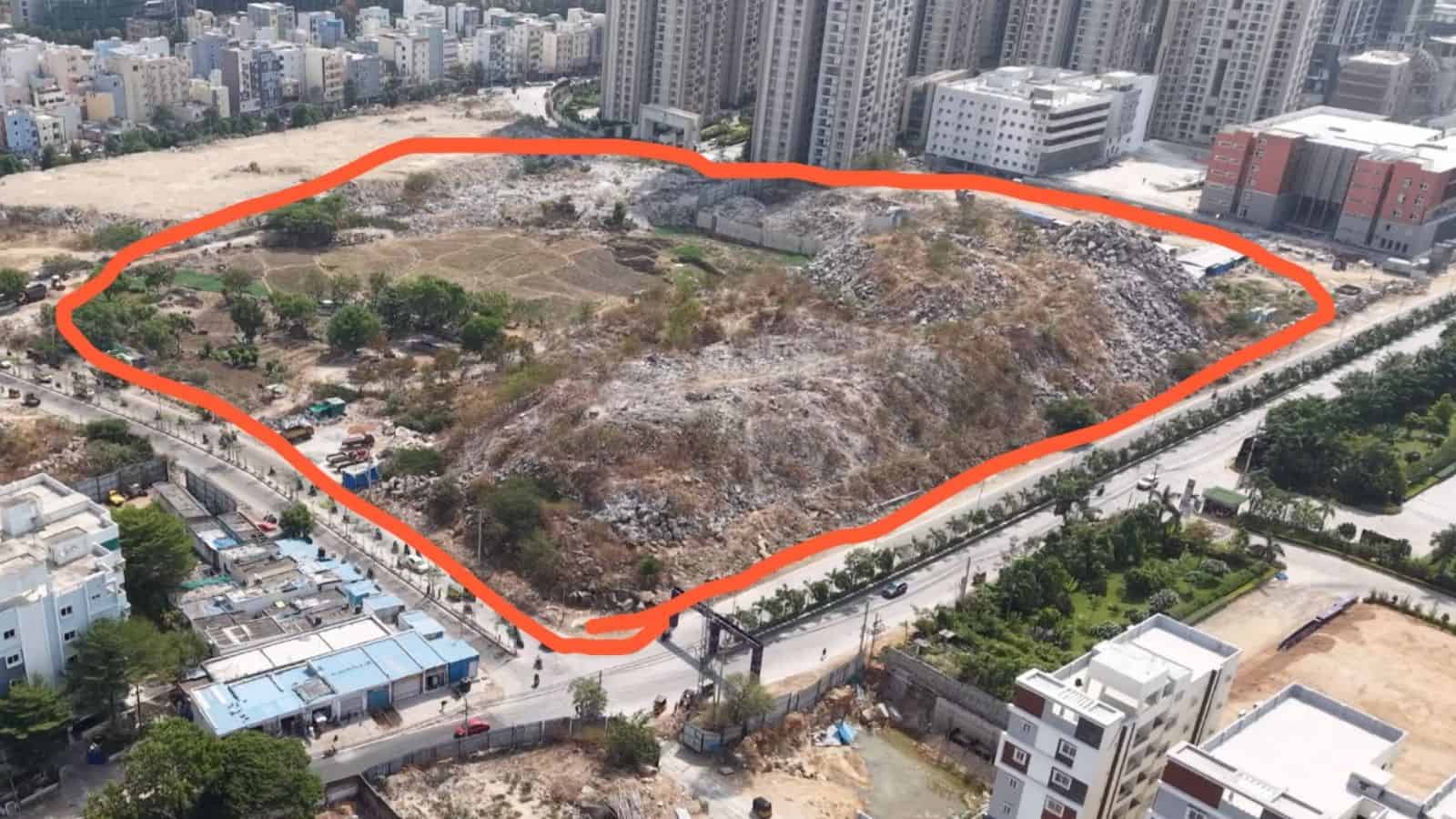
The Hyderabad Disaster Response and Asset Protection Agency (HYDRAA) has completed fencing around 15 acres of government land valued at Rs 3,000 crore in Khanamet village, located in Serilingampally mandal of Rangareddy district. The fencing was completed on Wednesday, June 10, following orders from the Telangana High Court directing the Revenue Department to secure the land.
The court’s intervention became necessary because the government property had remained exposed to the risk of encroachment and illegal occupation. Without proper boundary demarcation and physical barriers, government land in Indian cities frequently falls into disputes where informal settlers claim rights or private parties attempt to take control. The High Court’s order specifically tasked HYDRAA with ensuring the land was fenced and properly protected. HYDRAA, established as the state’s disaster response and asset protection body, has increasingly been used to implement court orders regarding state property.
Government land across India’s growing cities faces a persistent problem. Large plots remain unguarded for years, during which they become targets for encroachment. In Hyderabad’s case, rapid urbanisation around Rangareddy has made such land increasingly valuable. The Rs 3,000 crore valuation of this 15-acre plot indicates it sits in or near a developing commercial or residential zone where land prices have risen significantly. Such high valuations make government property attractive targets for illegal occupation or fraudulent claims of ownership.
The fencing represents the first practical step toward securing the land. Physical boundaries prevent informal settlers from establishing presence and claiming rights through long-term occupation, a common practice in Indian property disputes. Until the land is formally handed over for development, auctioned, or allocated for public purpose, securing it physically is the only way to maintain state control.
Encroachment of government land is not unique to Hyderabad. Cities across India report similar cases where state property disappears into private hands through a combination of administrative negligence, forged documents, and informal occupation that goes unchallenged for years. By the time disputes reach courts, decades of occupation have created messy legal battles where proving government ownership becomes complicated.
The Telangana High Court’s intervention suggests this particular land had either faced an immediate threat of encroachment or there was a dispute about its status. Court orders of this kind typically come after government bodies file complaints about illegal occupation or when property rights are formally contested. The fact that the court directed fencing rather than relying on routine administrative practice indicates the situation required judicial oversight.
RANGAREDDY DISTRICT, WHERE THE LAND IS LOCATED, HAS SEEN RAPID PROPERTY VALUE INCREASES AS HYDERABAD EXPANDS. Agricultural land has been converted to urban use, and government holdings in such areas become especially contested as commercial potential rises. The Revenue Department’s inability to act without court orders suggests administrative delays or capacity issues in protecting state assets.
HYDRAA’s role in implementing this order reflects a broader pattern where disaster management and emergency response agencies are being tasked with protecting public assets. The agency was originally established to handle disaster response, but has expanded its mandate to asset protection, indicating government recognition that specialised bodies may be more effective than traditional revenue departments in securing state property.
The completion of fencing is a practical outcome, but the underlying issue remains unsolved. The land still needs to be transferred for development, allocated for public use, or properly categorised in government records to prevent future disputes. Fencing buys time but does not resolve ownership or usage rights. Court orders securing the perimeter are common in Indian property disputes, but they often mark the beginning of lengthy legal processes rather than their conclusion.
For residents of Rangareddy and Hyderabad more broadly, such court interventions signal that government property remains vulnerable. Citizens frequently see government land occupied illegally or converted to private use through informal processes. The visible fencing around this 15-acre plot is a rare example of state action following court order, but without sustained monitoring and proper legal resolution, such land often remains contested for years.
Source: Siasat.com