



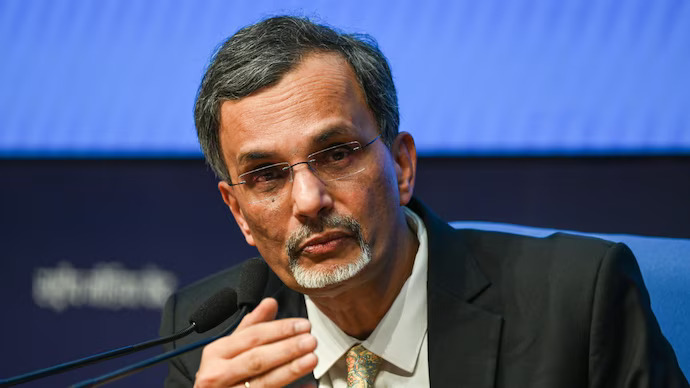
Chief Economic Adviser V Anantha Nageswaran has proposed restoring E10 petrol alongside E20 for older vehicles and urged India to examine the food-versus-fuel trade-off before pushing ethanol blending beyond 20%. In a column published in The Indian Express with Department of Economic Affairs consultant Akash Poojari, the authors estimate that 75 to 80 million older two-wheelers built before BS-IV and equipped with carburettors remain on Indian roads.
These vehicles present a specific technical problem. A carburettor cannot sense the additional oxygen in a higher ethanol blend and adjust the fuel-air mixture, potentially leaving the engine running hotter. Older rubber components may also not have been designed to withstand ethanol. The authors argue that retrofitting is possible but impractical at scale, and propose E10 as an interim option while the older fleet is gradually upgraded.
The column’s broader argument concerns what higher ethanol blending commits India to. India produces ethanol from sugarcane, maize, rice and other grains, and as demand grows, these crops acquire a competing buyer in distilleries. Greater demand for maize as a fuel feedstock can influence what farmers grow, while maize also serves as a critical input for poultry and livestock feed. The government is already reportedly considering restricting sugarcane for ethanol next season after around 3 million tonnes of sugar, roughly 10% of annual output, was diverted to ethanol this season.
The authors extend the argument to water, saying the relevant question is not how much an ethanol plant uses but how much is needed to grow the feedstock. Their core concern is irreversibility: once land, water and cropping patterns are built around fuel production, “pulling back can be painful.” They caution specifically against moving towards E27 or E30 without accounting for these costs, warning that at higher blends “fuel begins to crowd out food.”
E20 remains government policy. Officials have defended the fuel on technical and economic grounds and have said there are no plans to move beyond 20%. The CEA’s column does not reject those benefits. It asks whether India has fully calculated what they cost in food, feed and water.
Soure: India Today