



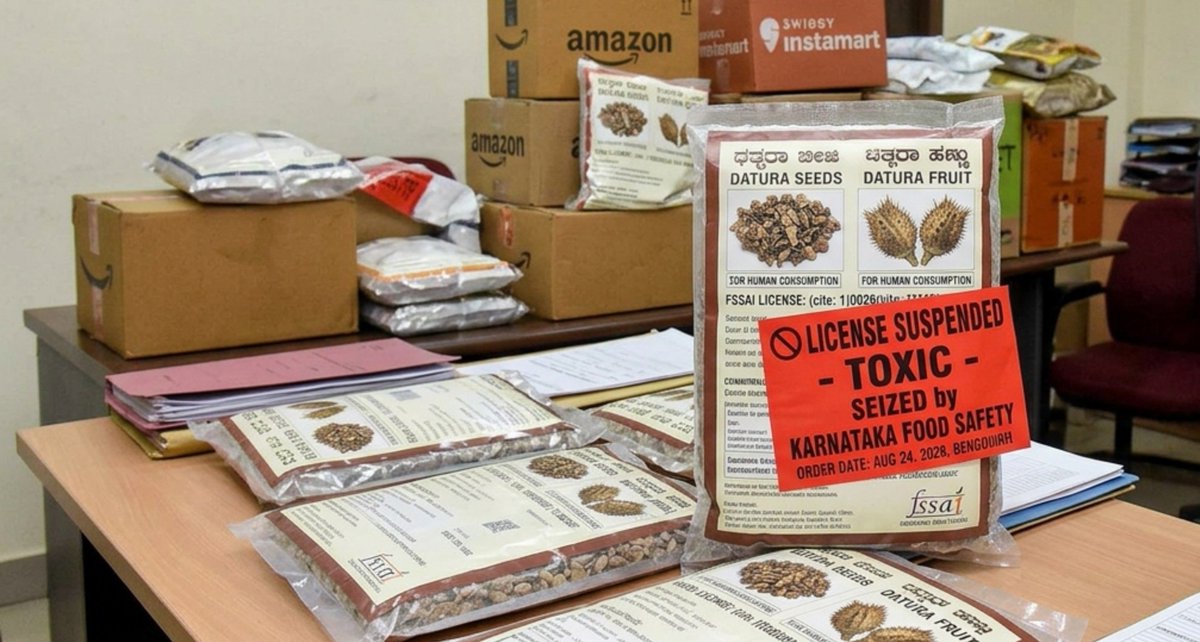
Amazon, Instamart, and BigBasket have had their food business licences suspended in Karnataka after an investigation found they were selling datura fruits and seeds on their platforms. Datura is a highly toxic plant that can cause severe poisoning and death if consumed. The state’s Food Safety and Drugs Administration Department took this action to protect consumers from a product that poses immediate health risks.
Datura contains alkaloid compounds that are poisonous to the human body. Eating even small quantities can trigger confusion, hallucinations, rapid heartbeat, seizures, and respiratory failure. There is no antidote for datura poisoning. Treatment in hospitals is only supportive, meaning doctors can manage symptoms but cannot reverse the damage. Cases of datura poisoning have been reported across India, with victims requiring emergency hospitalisation and sometimes experiencing permanent organ damage.
The most dangerous aspect is how easily datura seeds can be mistaken for edible varieties. People have bought what they believed were coriander, fennel, or garden seeds online only to fall critically ill after consumption. In some instances, sellers listed datura deliberately under misleading names, while in others, the misclassification appeared accidental but equally dangerous. The fact that major platforms with sophisticated systems let this happen reveals a significant oversight gap in their food safety processes.
These three companies claim to verify sellers and products before listing them, but toxic plants bypassed their controls. Under India’s Food Safety and Standards Act, the business that sells a product is held responsible, regardless of whether they directly sourced it or merely hosted the listing. This legal responsibility means Amazon, Instamart, and BigBasket cannot shift blame to individual sellers. The suspension means they cannot legally sell any food items in Karnataka until the regulator is satisfied they have fixed their verification systems and passed a fresh inspection.
The suspension reflects a broader pattern of inadequate oversight on e-commerce food sales in India. Platforms have grown rapidly but safety infrastructure has not kept pace. While authorities have no choice but to enforce the law, this enforcement happens only after people have already been harmed. The case also highlights how difficult it is for regulators to monitor what millions of sellers list online in real time.
For consumers, the practical takeaway is to buy seeds and spices from established local shops or sealed branded packages with verified origins whenever possible. For e-commerce platforms, the suspension is a clear signal that scale and convenience cannot replace basic safety. The investigation is ongoing, and the platforms will need to demonstrate significant changes before their licences are reinstated.