




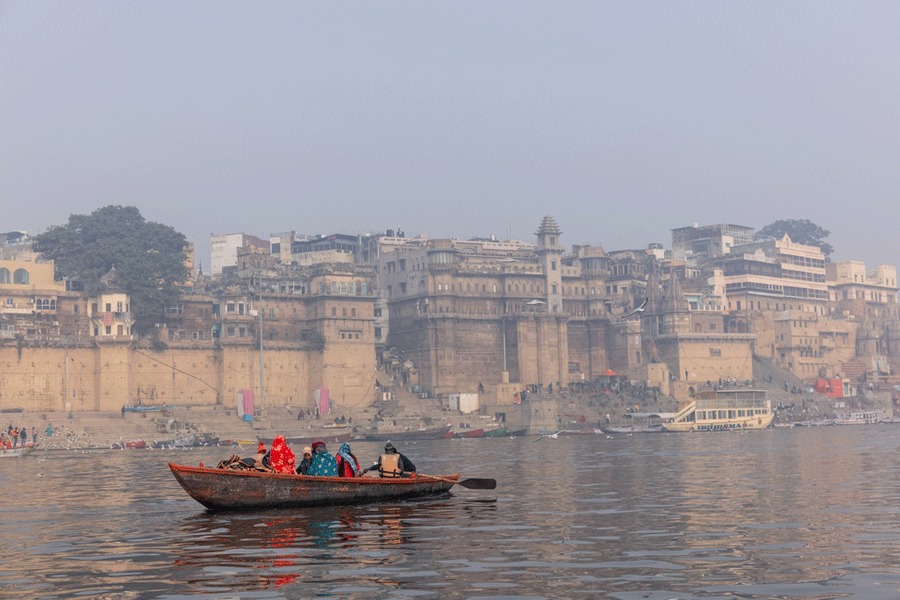
The Centre has defended the progress of its Namami Gange programme after a Bloomberg investigation found that large stretches of the Ganga continue to face pollution, with water clarity showing little improvement over the past decade despite substantial government spending.
Bloomberg analysed a decade of satellite data covering nearly 2,000 kilometres of the river, conducted independent water tests and carried out ground reporting. Its findings indicated that nearly 80% of the river became muddier in the months following the monsoon. Water samples collected from industrial areas and religious centres also reportedly showed contaminants exceeding permissible limits.
Responding to the findings, the government argued that the river’s condition could not be assessed through a limited number of satellite indicators and water samples. It cited improvements in water quality across several stretches, expanded sewage treatment infrastructure and better industrial compliance.
According to the government, the Ganga’s main stem states generate approximately 10,160 million litres of sewage daily. Available treatment capacity stood at 7,820 million litres per day in December 2025, with projects adding another 1,996 million litres per day at various stages of implementation.
The Centre also highlighted improvements downstream of Haridwar, where the river was removed from the Central Pollution Control Board’s list of polluted river stretches. Similar progress was reported along the Kanpur-Varanasi stretch. Industrial compliance in the Ganga basin reportedly increased from 39% in 2017 to 86% in 2025.
However, Bloomberg’s investigation pointed to continued discharge of untreated sewage and industrial waste, weak enforcement and coordination gaps between government agencies. It also reported that only a little over half of the funds allocated to the programme had been spent by September 2026.
The government said 531 projects worth Rs 43,064 crore had been sanctioned under Namami Gange, of which 371 had been completed. It reported that Rs 21,845 crore had been disbursed or spent, explaining that payments under the Hybrid Annuity Model are linked to plant performance and spread over approximately 15 years.
The Centre acknowledged that pollution persists in certain stretches and said continued monitoring, enforcement and coordination between central and state agencies would be necessary for the river’s long-term rejuvenation.
Source: The Telegraph