



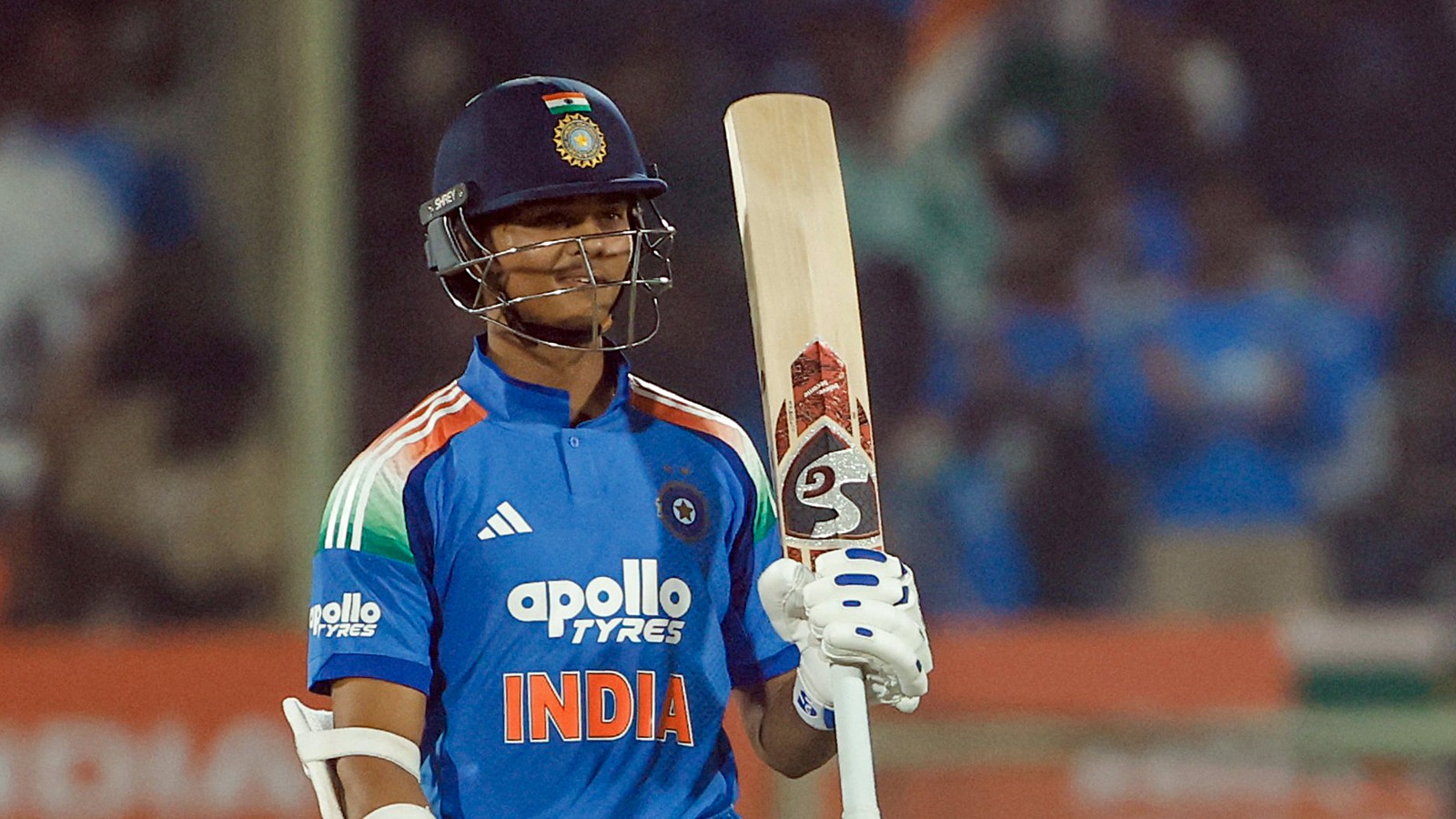
Yashasvi Jaiswal’s India career has reached an unusual stage. At 24, he has already established himself as one of the country’s most promising batters across formats, yet regular white-ball opportunities remain difficult to come by.
The latest India squads underline the problem. Jaiswal has been picked for the three-match ODI series against West Indies, but Rohit Sharma remains in the squad as the preferred opening option alongside Shubman Gill. In T20Is, Jaiswal has been left out altogether, while 15-year-old Vaibhav Sooryavanshi continues to occupy a place in India’s plans.
Few situations could better illustrate how quickly Indian cricket’s hierarchy can change.
Jaiswal has been a regular in Tests since making his debut in 2023, playing all 31 Tests India have featured in during that period. His white-ball journey, however, has been far less straightforward. He has played only a fraction of India’s T20Is since his debut in the format, while his ODI career began only in February 2025.
Yet his limited ODI opportunities have offered plenty of evidence of his suitability to the format. Jaiswal has scored 285 runs in six ODIs at an average of 71.25, including hundreds against South Africa and Afghanistan.
That makes the upcoming West Indies series particularly important. With the 2027 ODI World Cup approaching, India need to establish their core and understand where Jaiswal fits into it. The three-match series beginning September 27 gives him another opportunity to make the case through performances rather than potential.
The bigger complication is Rohit. At 39, the veteran remains in India’s ODI plans, with his experience and recent performances keeping him ahead of the younger opener. Rohit scored a century at Lord’s in India’s most recent ODI series against England and has continued to express his desire to play in the 2027 World Cup.
Jaiswal therefore finds himself competing against two very different timelines. In T20 cricket, a teenager is pushing into the conversation before him. In ODIs, a legendary opener is refusing to vacate his position.
That does not make Jaiswal’s international future uncertain. His Test record, ODI numbers and three-format ability have already established his credentials. What remains unclear is how quickly India can create a consistent white-ball role for him.
For now, the answer may be patience. Jaiswal’s next opportunity has arrived in ODIs. What he does with it could determine how much longer he has to wait for a permanent place.