



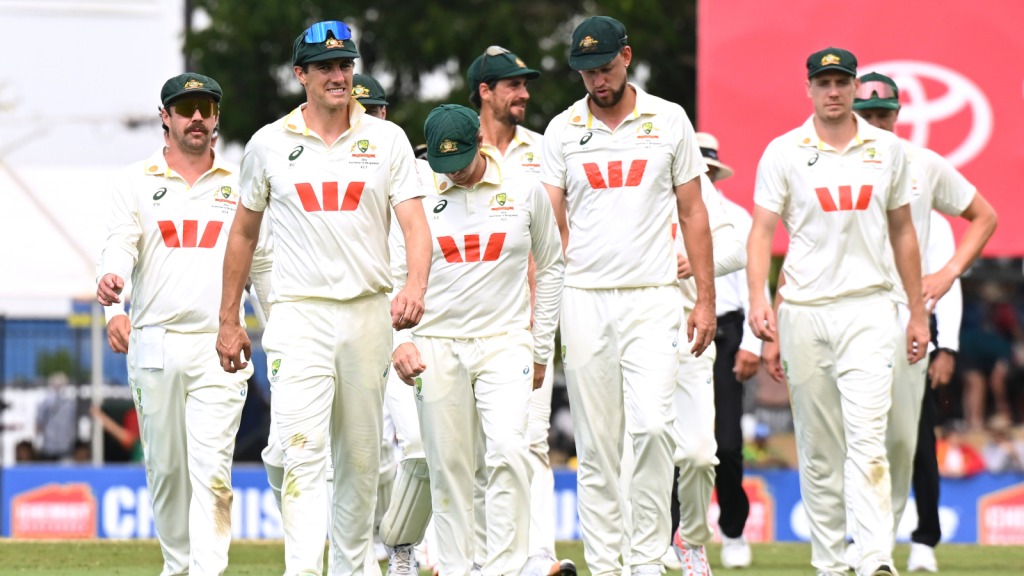
Australia’s shock nine-wicket defeat to Bangladesh in Darwin has raised a bigger question than what went wrong in one Test: how long can the current generation remain the core of their Test side?
Former Australia fast bowler Jason Gillespie believes the squad is ageing and expects selectors to introduce new players over the next six to 12 months. He does not, however, believe Australia need an immediate overhaul.
“There is a lot of experience in that Australian side, but it is an ageing side,” Gillespie said. The challenge, he suggested, is beginning the transition before several senior players leave at the same time.
Gillespie still expects Australia to respond strongly in the next Test in Mackay, but believes some positions are increasingly open to competition. Marnus Labuschagne, in particular, could come under pressure if he fails again.
He also backed Josh Hazlewood to retain his place ahead of Scott Boland, pointing to Hazlewood’s 300-plus Test wickets and his 6/89 in Darwin.
The more significant discussion, though, concerns who comes next.
Gillespie identified Ollie Peake, Jayden Goodwin, Campbell Kellaway and Sam Konstas as young batting options, while Matt Renshaw and Peter Handscomb could also come into consideration for the upcoming Border-Gavaskar Trophy. Among the spin options, he mentioned Corey Rocchiccioli, Lloyd Pope and Tanveer Sangha.
He also named Callum Viddler, Jhye Richardson, Nathan McAndrew and Jordan Buckingham as possible future fast-bowling options.
For Gillespie, selection cannot simply be based on who has the biggest domestic average. Australian conditions and the Kookaburra ball can suppress batting numbers, meaning selectors need to assess whether a player’s skills can translate to Test cricket.
That becomes particularly relevant when replacing established players. Cameron Green, despite having already played 38 Tests, is another player Gillespie believes needs to take the next step. He said Green now has to move from being viewed as a “potential player” to becoming a consistent performer.
That is ultimately the challenge facing Australia. Their senior players have produced enough over the years to make wholesale change difficult to justify, but waiting until several of them decline simultaneously could leave the selectors with too many gaps to fill at once.
The Darwin defeat does not mean Australia’s current generation has run its course. It does, however, offer a reminder that the next generation needs to be integrated before the transition becomes an emergency.
Australia has rebuilt successfully before. Gillespie’s argument is that they should start doing it while they still have the luxury of time.