




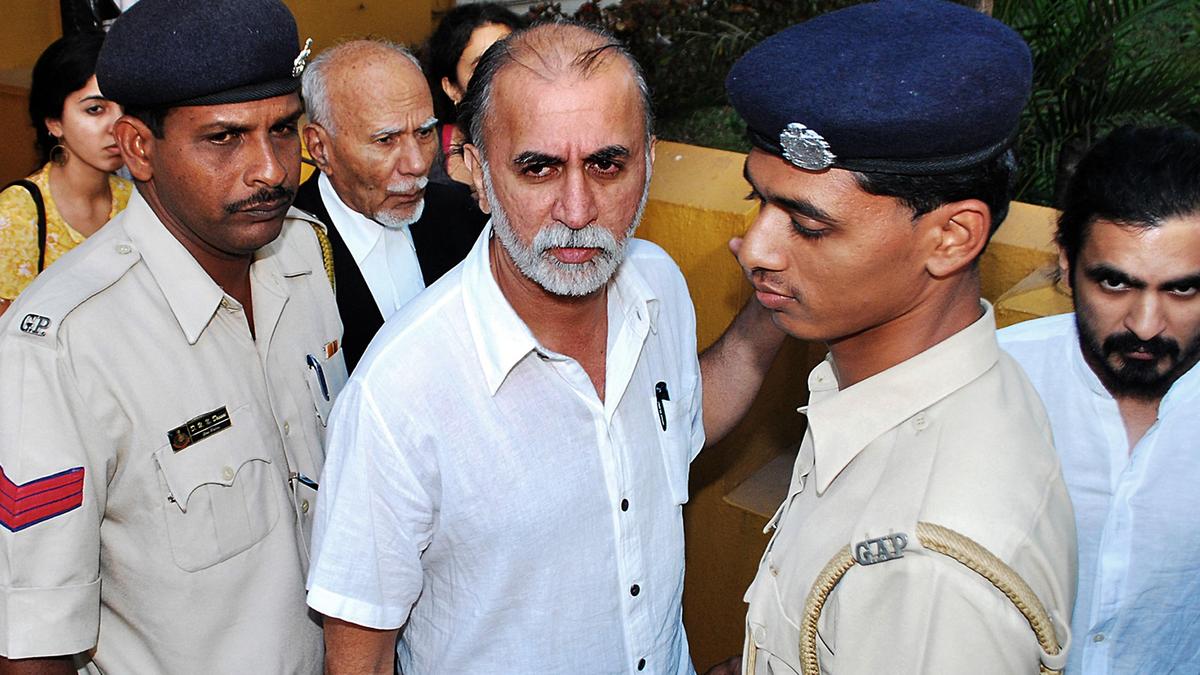
The Bombay High Court has convicted journalist Tarun Tejpal in a 2013 sexual assault case, overturning an acquittal that a lower court had given him two years ago. The Goa bench of the high court found Tejpal guilty on Wednesday and said it would announce his sentence later that afternoon. The case stems from an incident in November 2013 when Tejpal, then editor of the news magazine Tehelka, was accused of sexually assaulting a junior colleague inside a lift at a Goa hotel during an event. The woman had filed a police complaint and the case went to trial.
The lower court had acquitted Tejpal in 2022, concluding there was insufficient evidence to prove the charges against him beyond reasonable doubt. The survivor and the Goa government challenged that acquittal in the high court. During Wednesday’s hearing, Solicitor General Tushar Mehta, appearing for the Goa government, argued for the maximum possible punishment. He told the court that a strong conviction was necessary to send a clear message that “no means no” and to deter future offenders.
This conviction matters because it affects how sexual assault cases are handled in Indian courts. Lower courts have historically struggled with evidence in assault cases, especially when the assault happens in confined spaces or when there are no external witnesses. The high court’s decision to overturn the acquittal signals that courts can rely on the survivor’s account and circumstantial evidence, not just video footage or third-party witnesses. It also reflects changing judicial thinking about what constitutes sufficient proof in sexual assault cases.
The case also reflects the ongoing conversation about power dynamics in workplaces. Tejpal held a senior position over the survivor at the time. The incident happened a decade ago, but the legal process has continued to challenge the original acquittal, keeping the case in public view and demonstrating that survivors can pursue justice even after initial setbacks in court.
The sentencing, which will come later in the day, will determine whether Tejpal faces jail time or other penalties. His legal team is expected to argue for leniency during the sentencing hearing. The case will likely be watched closely by legal experts and women’s rights groups as it may influence how Indian courts approach similar cases in the future.