



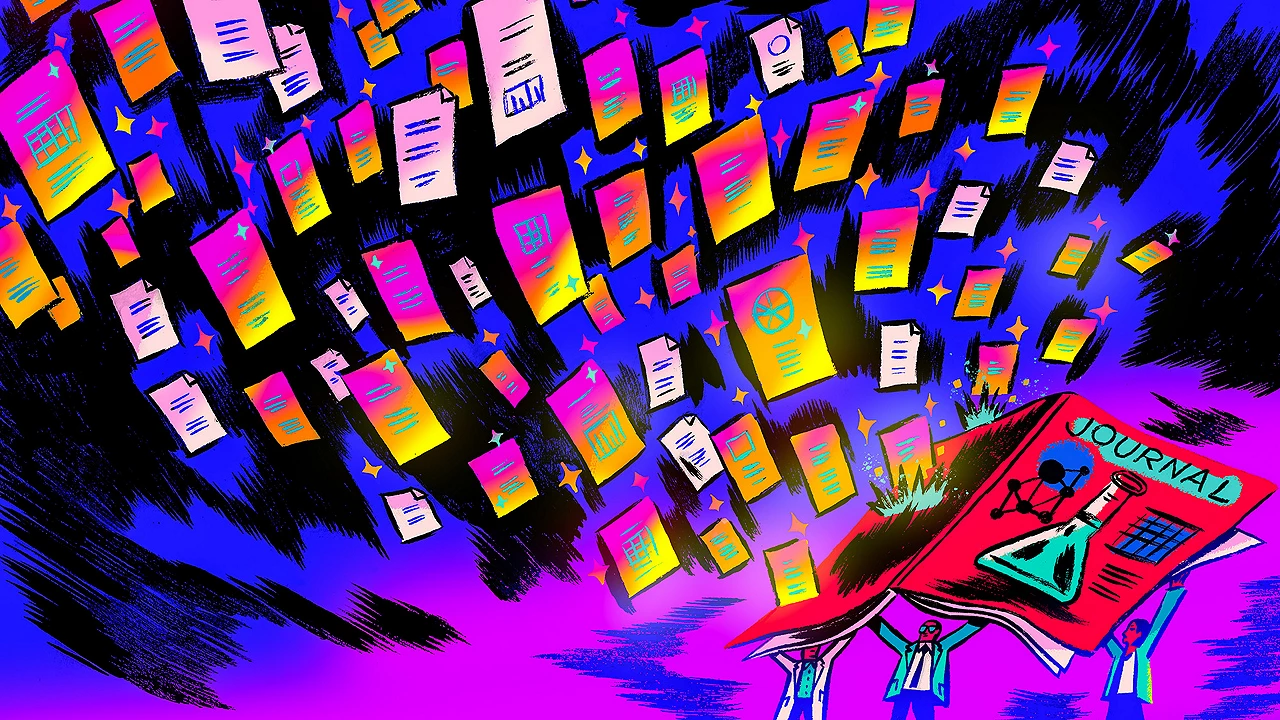
Academic journals are publishing thousands of papers written under fake researcher names, according to an investigation by 404 Media. These ghost researchers, including identities like Elena Vasquez and Marcus Chen, are submitting AI-generated content to peer-reviewed publications without being caught. The scale reveals that academic publishing’s quality control has collapsed in many cases.
The system works like this: someone invents a researcher name and email address, writes a paper using AI tools, and submits it to a journal. The journal sends it for peer review, but if the reviewers don’t exist either, no one catches the problem. Papers get published, citations accumulate, and the fake work enters the permanent scientific record. Some journals are accepting papers at rates that suggest almost no human scrutiny is happening.
Why this matters is immediate and serious. Academic papers are the foundation of human knowledge. Medical students learn treatment approaches from these papers. Public health officials use research to make decisions about vaccines and disease control. Environmental scientists rely on peer-reviewed studies to understand climate impacts. When thousands of fake papers pollute this record, everyone downstream suffers. A doctor reading a paper about a new treatment doesn’t know if it came from a real researcher who conducted actual experiments or from an AI ghost.
The institutional failure runs deep. Journals have basic tools to verify authors: check if email addresses exist, contact institutions to confirm the person actually works there, verify that reviewers are real people. Most don’t use these tools. Publishers prioritize speed and volume over verification. Open-access journals, which charge authors to publish, have financial incentive to say yes to submissions rather than investigate them carefully.
Real researchers are harmed too. When your field gets flooded with fake papers, your genuine work drowns in noise. Funding becomes harder to secure. Progress slows because nobody can trust what they’re reading. The most damaging outcome is subtler: people stop believing academic journals altogether, which undermines trust in actual science.
This isn’t a technical problem that’s hard to solve. It’s a choice. The academic publishing industry is worth billions of dollars. The biggest publishers have resources to implement proper verification systems. Instead, they’ve created incentive structures that reward volume and profit over credibility. The consequences accumulate silently in the scientific record.