



Indian cricket is about to demonstrate just how large its talent pool has become. Between September 22 and October 17, as many as 69 different Indian cricketers are expected to be involved across 15 venues, with the BCCI effectively running five teams across the Asian Games, West Indies series, India A programme and Irani Cup.
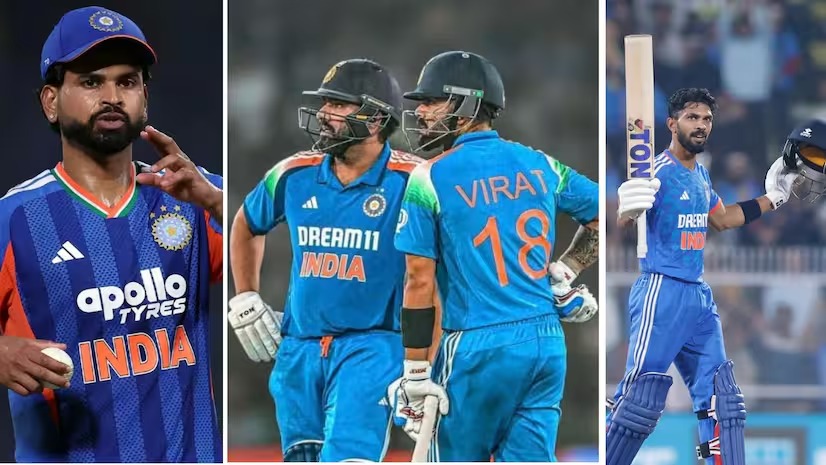
The scale is striking because these are not five versions of the same squad. Each group has a different purpose. One will defend India’s Asian Games title with a strong T20 side, another will feature Rohit Sharma and Virat Kohli in the ODI setup, a separate T20I group will continue competing for places, India A will test players against Australia A, while the Rest of India side will face Ranji Trophy champions Jammu & Kashmir in the Irani Cup.
It is an unusually clear demonstration of the depth available to Indian cricket.
The Asian Games squad is perhaps the strongest indication of that depth. Shreyas Iyer will captain a group containing established internationals such as Jasprit Bumrah, Ishan Kishan, Sanju Samson, Abhishek Sharma, Tilak Varma, Axar Patel, Washington Sundar and Arshdeep Singh, alongside 15-year-old Vaibhav Sooryavanshi. India will also play a T20I against Japan on September 22 before entering the Asian Games knockout stage.
At almost the same time, another group will prepare for the West Indies. Shubman Gill will lead an ODI side that brings Rohit and Virat back into the format, while players such as Ruturaj Gaikwad, Yashasvi Jaiswal, Dhruv Jurel, Gurnoor Brar, Auqib Nabi and Naman Dhir widen the pool. The T20I squad is different again, with Iyer, Abhishek, Ishan, Samson, Tilak and Sooryavanshi among those competing for roles.
Behind them, the India A programme keeps another layer active. The multi-day squad, led by Devdutt Padikkal, includes Sai Sudharsan, Kumar Kushagra, Shams Mulani, Tanush Kotian and Anshul Kamboj, while a separate group will play Australia A in 50-over cricket.
Then there is the Irani Cup. Rishabh Pant will captain Rest of India against Jammu & Kashmir in Srinagar, with Sarfaraz Khan, Manav Suthar, Saransh Jain, Anukul Roy and others giving domestic cricket its own high-profile stage.
The importance of this five-week stretch goes beyond the number of matches. It allows the selectors to assess established internationals, emerging players, domestic performers and format-specific specialists almost simultaneously. Having 69 players involved across multiple levels at the same time is itself a significant marker of how far Indian cricket’s depth has grown.