



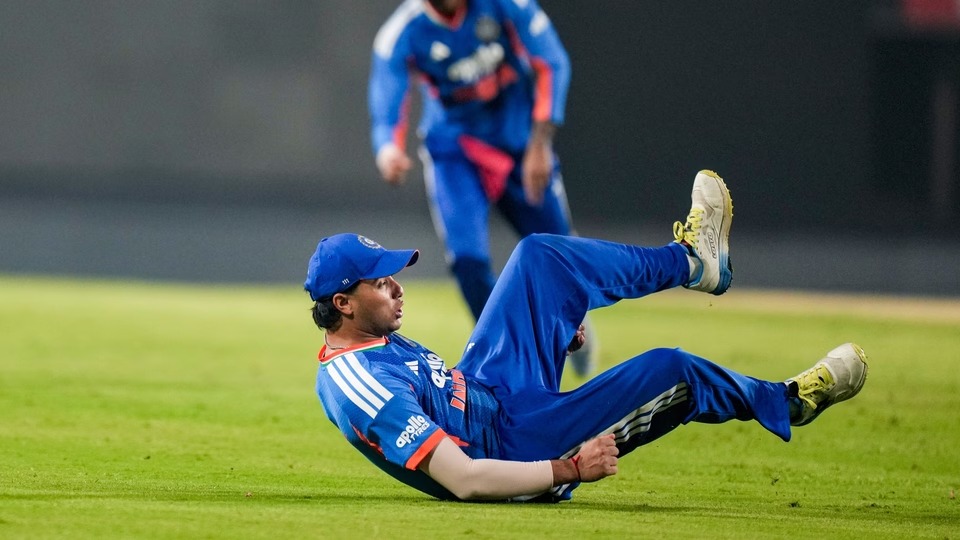
India’s catching problems in T20Is have become increasingly difficult to ignore. During the third T20I against the West Indies in Indore, Abhishek Sharma dropped a chance to dismiss Shimron Hetmyer in the third over, fumbling a straightforward opportunity after appearing uncertain about whether to attempt a conventional catch or a reverse cup. The mistake was another example of a problem that has persisted throughout the year.
According to CricViz data, India have dropped 55 catches in 32 T20Is in 2026, recording a catching efficiency of just 74.4%. That makes them the second-worst side among the 12 full-member nations, ahead of only the West Indies, whose efficiency stands at 73.8%.
The decline has been gradual but pronounced. India’s catching efficiency stood at 80.4% in 2024 before slipping to 79.8% in 2025 and falling further this year. Australia, meanwhile, have improved from 80.2% in 2024 to 83% in 2026.
The number of dropped chances tells a similar story. India put down 33 chances in 26 matches in 2024 and 26 in 19 matches in 2025. This year, the tally has climbed to 55 across 32 matches.
Individual performances offer little reassurance. Tilak Varma has taken 23 catches in 27 matches, making him India’s leading fielder by catches taken, but he has also dropped nine chances. Abhishek Sharma’s catching efficiency is 57.8%, while Washington Sundar’s stands at 62.5%.
The change in India’s fielding coaching setup has yet to produce a visible turnaround. Subhadeep Ghosh replaced T Dilip, but the underlying concerns remain.
Former India fielding coach R Sridhar believes the problem goes beyond individual errors and reflects a broader lack of emphasis on fielding.
“I think fielding has now definitely taken a backseat in terms of application and in terms of building a certain culture,” Sridhar said during a media interaction.
He pointed out that India have developed clear identities in batting and bowling, but a comparable culture appears to be missing in the field. His assessment raises questions about the attention given to fielding preparation, individual technique and the standards expected from players.
In T20 cricket, where matches can turn on a single delivery, dropped catches carry a significant cost. India cannot afford to keep giving opposition batters extra opportunities while aspiring to dominate the format.
The problem will require more than isolated catching drills. India need greater consistency in technique, decision-making and accountability across the fielding unit. Until those standards improve, their catching could remain a weakness in an otherwise competitive T20I side.