




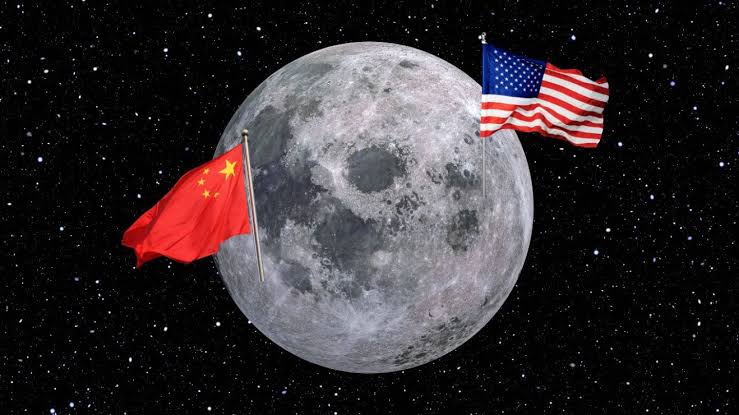
The race between the United States and China to return astronauts to the Moon may be much closer than official timelines suggest. While Nasa is targeting a crewed lunar landing in 2028 under its Artemis programme and China aims to send astronauts to the lunar surface before 2030, Nasa Administrator Jared Isaacman believes the practical gap between the two programmes is far narrower.
Speaking to CBS’ Face the Nation, Isaacman said the United States is “very much in a space race right now” with China. He argued that the coming years will determine which country reaches the Moon first while establishing the foundations for a sustained human presence.
China has steadily expanded its space capabilities over the past two decades, successfully carrying out multiple robotic lunar missions and advancing plans for crewed exploration. Isaacman said there is little doubt that Chinese astronauts will eventually land on the Moon. The bigger question, he suggested, is whether the United States can get there first while building the infrastructure needed for long-term operations rather than a single symbolic mission.
Unlike the Cold War-era competition with the Soviet Union, Isaacman noted that today’s race involves a rival with demonstrated technological capabilities. That, he said, makes the current contest fundamentally different from the one that culminated in the Apollo programme.
Nasa has already completed Artemis II, a mission that sent four astronauts around the Moon without attempting a landing. The flight tested spacecraft systems and mission procedures ahead of future lunar expeditions. Attention is now shifting to Artemis III, which is expected to validate several technologies required for human landings before Artemis IV attempts to return astronauts to the Moon in 2028.
The agency’s ambitions extend beyond reaching the lunar surface. Nasa plans to begin sending cargo and equipment to the Moon from 2027, gradually assembling the infrastructure needed to support regular missions. By the time astronauts arrive, early facilities and a lunar terrain vehicle designed to help crews travel across the surface are expected to be in place. Additional missions through 2029 are planned to expand those capabilities.
For Nasa, the Moon is also a stepping stone to deeper space exploration. The agency expects lessons from living and working on the lunar surface—including habitat construction, resource management and long-duration missions- to help prepare astronauts for eventual journeys to Mars.
With both countries accelerating their lunar programmes, the race is no longer simply about who plants a flag first. It is increasingly about who establishes a lasting presence on the Moon and shapes the next phase of human space exploration.The race between the United States and China to return astronauts to the Moon may be much closer than official timelines suggest. While Nasa is targeting a crewed lunar landing in 2028 under its Artemis programme and China aims to send astronauts to the lunar surface before 2030, Nasa Administrator Jared Isaacman believes the practical gap between the two programmes is far narrower.
Speaking to CBS’ Face the Nation, Isaacman said the United States is “very much in a space race right now” with China. He argued that the coming years will determine which country reaches the Moon first while establishing the foundations for a sustained human presence.
China has steadily expanded its space capabilities over the past two decades, successfully carrying out multiple robotic lunar missions and advancing plans for crewed exploration. Isaacman said there is little doubt that Chinese astronauts will eventually land on the Moon. The bigger question, he suggested, is whether the United States can get there first while building the infrastructure needed for long-term operations rather than a single symbolic mission.
Unlike the Cold War-era competition with the Soviet Union, Isaacman noted that today’s race involves a rival with demonstrated technological capabilities. That, he said, makes the current contest fundamentally different from the one that culminated in the Apollo programme.
Nasa has already completed Artemis II, a mission that sent four astronauts around the Moon without attempting a landing. The flight tested spacecraft systems and mission procedures ahead of future lunar expeditions. Attention is now shifting to Artemis III, which is expected to validate several technologies required for human landings before Artemis IV attempts to return astronauts to the Moon in 2028.
The agency’s ambitions extend beyond reaching the lunar surface. Nasa plans to begin sending cargo and equipment to the Moon from 2027, gradually assembling the infrastructure needed to support regular missions. By the time astronauts arrive, early facilities and a lunar terrain vehicle designed to help crews travel across the surface are expected to be in place. Additional missions through 2029 are planned to expand those capabilities.
For Nasa, the Moon is also a stepping stone to deeper space exploration. The agency expects lessons from living and working on the lunar surface—including habitat construction, resource management and long-duration missions—to help prepare astronauts for eventual journeys to Mars.
With both countries accelerating their lunar programmes, the race is no longer simply about who plants a flag first. It is increasingly about who establishes a lasting presence on the Moon and shapes the next phase of human space exploration.