



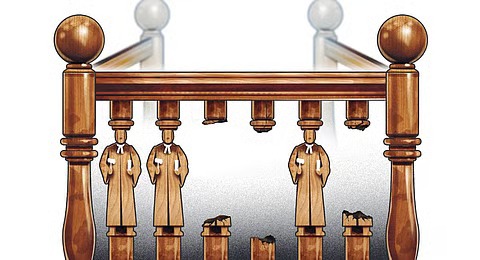
India’s judicial system is facing mounting pressure, with more than 7,300 vacant positions in district courts and nearly 300 vacancies across High Courts, while the total number of pending cases has crossed 5.8 crore.
Nearly 25% of sanctioned judicial positions in High Courts and district courts remain unfilled. In the lower judiciary alone, more than 2,000 posts are vacant, raising concerns about delays in delivering justice to litigants across the country.
Legal experts have attributed the growing backlog partly to delays in judicial appointments. Retired Allahabad High Court judge S R Singh said the process of filling vacancies often begins only after a judge retires, despite retirement dates being known in advance.
The appointment process involves several stages, including recommendations by High Court collegiums, scrutiny by the Union Law Ministry and Intelligence Bureau, and consideration by the Supreme Court collegium. This process can take between one and three years, allowing additional vacancies to accumulate before existing ones are filled.
Legal experts have called for a time-bound appointment system. One proposal is for High Court collegiums to recommend candidates six months before a vacancy arises, with the government and Supreme Court collegium given fixed deadlines to complete their respective stages. Greater transparency in the collegium system, including the criteria for selecting and deferring candidates, has also been recommended.
The scale of the backlog extends across all levels of the judiciary. According to the National Judicial Data Grid, approximately 64–65.5 lakh cases are pending across High Courts. The Supreme Court has around 93,000–95,000 pending cases.
The consequences are particularly significant for litigants involved in civil disputes, criminal appeals and matrimonial cases, many of which can remain unresolved for years.
Former judges have also pointed to delays caused by government departments and agencies, which are among the country’s largest litigants. Poor preparation and repeated adjournments by government representatives can further prolong proceedings.
With thousands of judicial positions vacant and millions of cases awaiting hearings, filling vacancies and improving the appointment process remain central challenges for India’s justice delivery system.
Source: The New Indian Express