



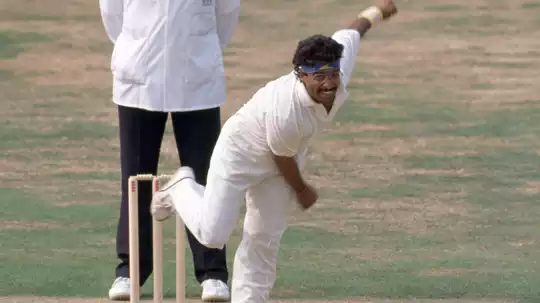
Narendra Hirwani’s Test career began with one of the most extraordinary debuts in Indian cricket. At just 19, the leg-spinner returned match figures of 16 for 136 against the West Indies in Madras, taking eight wickets in each innings. He also dismissed Viv Richards twice as India won by 255 runs.
The start was followed by another remarkable series against New Zealand, where Hirwani claimed 20 wickets in three Tests. After four matches, he had 36 wickets at an average of 14.61, and expectations around the teenager were enormous.
The challenge came when he moved away from Indian conditions. Against the West Indies in 1988-89, Hirwani took only six wickets in three Tests at 57.33. At The Oval in 1990, he bowled 59 consecutive overs and finished with figures of 1 for 137. His struggles overseas increasingly affected his place in the side.
Hirwani later recalled how quickly expectations had changed. After his sensational beginning, three or four wickets were no longer enough in the eyes of those watching him; people expected more. At the same time, Anil Kumble was emerging as India’s premier spinner, making opportunities even harder to come by.
Hirwani did return to the Test side against New Zealand at Cuttack in 1995, taking six for 59. He played only two more Tests, both against South Africa in 1996, bringing his career to 66 wickets from 17 Tests at 30.10.
His international career, however, did not mark the end of his cricket. Hirwani remained a prolific first-class bowler, finishing with 732 wickets at 27.05, including 441 in the Ranji Trophy. He took 54 five-wicket hauls and 10 ten-wicket match hauls.
Even in 2002-03, at 34, he took 79 first-class wickets and claimed 34 wickets in that season’s Duleep Trophy – the highest tally by a bowler in a single edition.
Hirwani’s Test career may have been brief, but the numbers show just how much cricket he continued to play after his international breakthrough faded.