



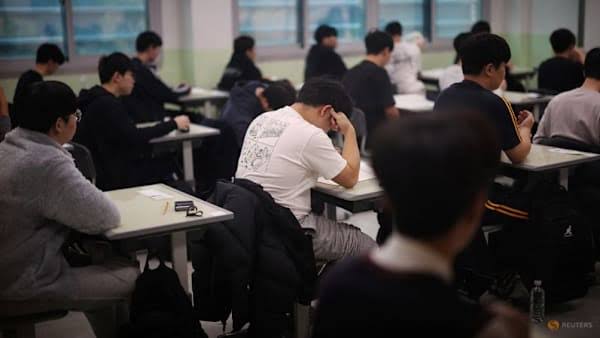
South Korea is offering cash rewards of at least 100 million won (approximately US$75,000) to people who report students using artificial intelligence (AI) devices to cheat in examinations. The move comes ahead of the country’s highly competitive college entrance exam, known as the Suneung, as authorities step up efforts to prevent technology-assisted cheating.
President Lee Jae Myung announced the incentives in a post on X on November 17, saying the reward could increase depending on the number of people involved in a cheating case. Students who disclose information about co-conspirators may also receive reduced penalties.
The announcement follows a series of high-profile cheating scandals. On November 15, the top scorer in a notoriously difficult accountancy examination admitted to using AI and a micro-camera as part of a scheme to secure near-perfect results.
Authorities are introducing extensive security measures for this year’s Suneung. Hundreds of trained proctors will be deployed at examination centres, while students will have to surrender their phones and other electronic devices. An emergency alert will also be sent nationwide to help identify phones that have not been handed in.
Graphite pencils will be the only permitted writing instruments. Officials will inspect students’ glasses for AI capabilities, while candidates have been advised to avoid jewellery, hats and clothing that could conceal miniature cameras. Buttons on shirts will be covered with stickers, Prime Minister Han Seong-sook said.
The government is also pushing for a 10-year ban on retaking the examination for those caught cheating, alongside criminal complaints and police investigations.
The scandals have drawn attention to AI-enabled glasses, with customers visiting Seoul stores to test their capabilities. Online marketplaces have also introduced guidelines to remove listings that suggest the devices could be used for examination fraud.
The measures reflect South Korea’s growing concerns about the use of increasingly sophisticated AI devices to undermine fairness in high-stakes examinations.
Source: Bloomberg