




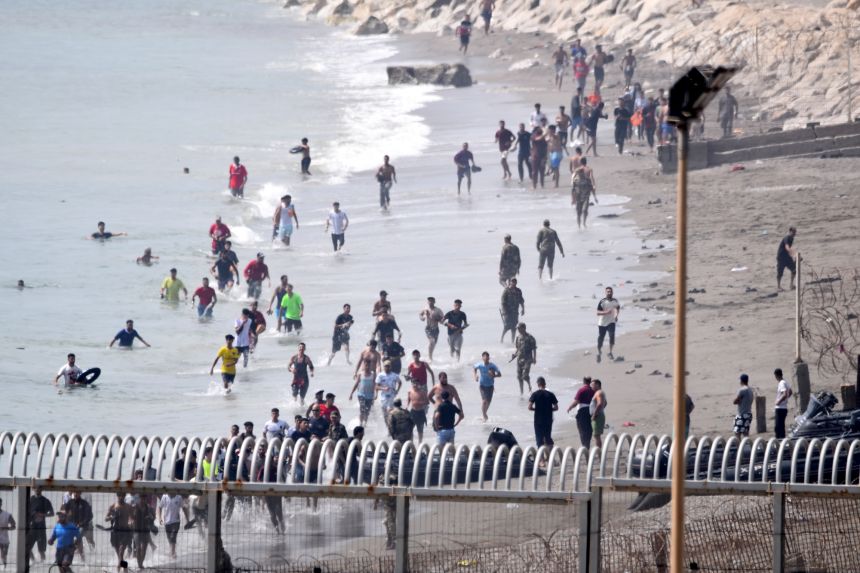
Spain has sent military troops to the North African enclave of Ceuta after thousands of migrants attempted to enter Spanish territory from Morocco in a single day. The crossing attempt ended in tragedy, with at least 15 people drowning while trying to swim across the narrow strait separating the two territories. Eyewitnesses described chaotic scenes at the beach as large numbers of people waded into the water despite dangerous conditions and strong currents.
Ceuta is a small Spanish territory located on the Moroccan coast, spanning about 600 square kilometers with a population of roughly 85,000 people. Its proximity to Morocco and status as European soil have made it a key entry point for migrants attempting to reach Europe from North Africa. The enclave, along with its sister territory Melilla further east, has experienced repeated waves of migration pressure over the past decade.
The deployment of troops signals Spain’s commitment to managing border security and controlling entry into the territory. Spanish authorities regularly face pressure to prevent unauthorized crossings while also managing humanitarian concerns about deaths at sea. The decision to send military personnel reflects how seriously the Spanish government views border control at this particular location.
The migrants attempting to cross on this day were likely fleeing economic hardship, violence, or persecution in their home countries. Many view reaching European territory as the first step toward accessing employment, safety, and stability. The willingness to undertake such a dangerous journey reveals the desperation people face in their countries of origin.
This incident is part of a larger pattern of migration across Mediterranean routes. Thousands of people attempt these dangerous crossings each year, and deaths in Mediterranean waters remain tragically common. The International Organization for Migration has documented thousands of deaths along migration routes over the past fifteen years. Each death represents not just a statistic but a family’s loss.
Spain and Morocco occasionally coordinate on border management and migration issues, though relationships between the two countries have been strained at times. Spanish officials must balance public concerns about migration numbers with humanitarian obligations to people in distress. The incident will likely intensify debate about whether border enforcement alone can address migration challenges or whether broader solutions targeting root causes are necessary.
The tragedy at Ceuta underscores an uncomfortable reality: the gap between where people are and where they want to be remains wide enough that thousands are willing to risk death to cross it.