




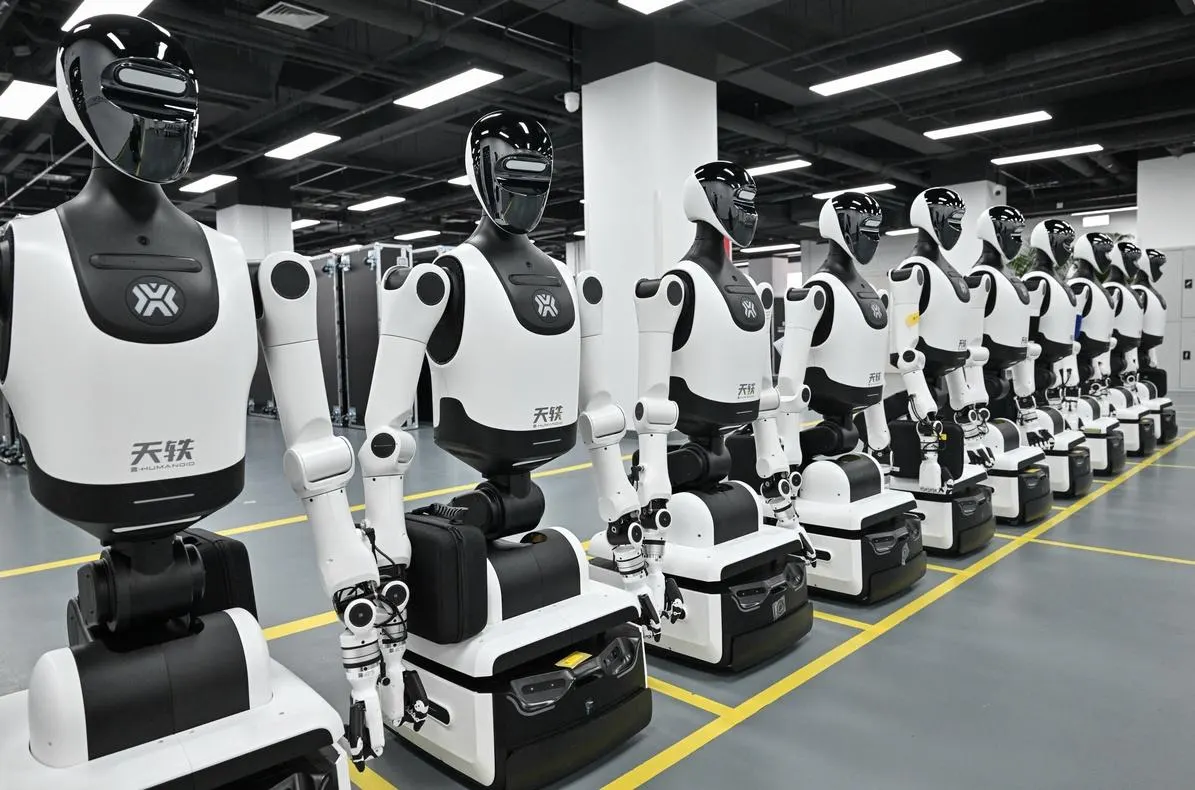
The Trump administration has introduced new restrictions that are expected to effectively block Chinese humanoid robots from entering the US market, marking another escalation in the technology rivalry between Washington and Beijing. Announced by the Federal Communications Commission (FCC), the measures require licences for certain foreign-made advanced robots and power inverters on national security grounds. While the policy does not explicitly ban Chinese robots, it is widely expected that Chinese manufacturers will not receive the necessary approvals, making it an effective ban in practice.
The FCC said the restrictions are intended to address potential cybersecurity and supply chain risks, warning that advanced robots could collect sensitive data, be remotely manipulated or disrupt critical infrastructure. Unlike conventional industrial machines, AI-powered robots continuously collect information from cameras, microphones, sensors and connected software. US officials argue that if these systems are compromised, they could expose sensitive industrial data or become entry points into critical infrastructure, raising concerns that extend beyond ordinary cybersecurity.
The move comes as Chinese companies have emerged as global leaders in humanoid robotics. Firms such as Unitree have rapidly expanded their presence across manufacturing, research and commercial applications, offering advanced robots at competitive prices. China has spent years investing in robotics as part of its broader industrial strategy, enabling domestic manufacturers to scale production quickly and lower costs. Unitree alone is estimated to account for nearly a fifth of the global humanoid robot market and recently partnered with Nvidia to integrate Blackwell AI chips into its robots.
The restrictions are the latest chapter in a broader US-China technology confrontation. Over the past several years, Washington has tightened export controls on advanced semiconductors, restricted access to high-end AI chips, scrutinised Chinese telecommunications companies and proposed new restrictions on Chinese AI models. The focus is now expanding beyond digital technologies to embodied AI, where intelligent systems can perceive, move and make decisions in the physical world. In other words, the competition is shifting from who builds the smartest algorithms to who controls the machines capable of putting those algorithms to work.
That distinction is important because humanoid robots are expected to play a growing role across manufacturing, logistics, healthcare, warehousing, defence and elderly care. Countries that lead in robotics could gain advantages not only in productivity but also in industrial resilience, labour shortages and military capability. As a result, governments are increasingly treating advanced robotics as strategic infrastructure rather than simply another consumer technology.
The restrictions therefore represent more than a trade measure. They illustrate how technological competition is evolving into a contest over entire AI ecosystems, spanning chips, models, cloud infrastructure and now intelligent machines. Rather than allowing global markets alone to determine technological leadership, governments are increasingly shaping competition through industrial policy, export controls and national security regulations.
The decision also reflects a broader reality of the AI era. Artificial intelligence is no longer confined to chatbots or software applications running on screens. As AI becomes embedded in machines that can move, interact with people and perform real-world tasks, questions of trust, security and technological sovereignty are likely to become as important as the capabilities of the underlying models themselves. The next phase of the AI race may ultimately be determined not only by who develops the most advanced intelligence, but by who builds the physical systems through which that intelligence operates.
Source: BBC News