



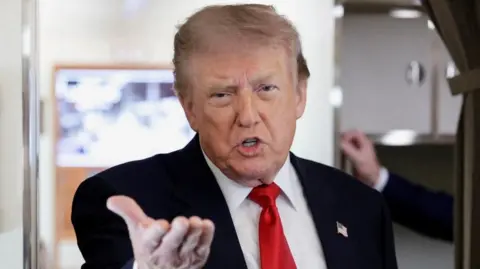
US President Donald Trump has said that discussions about potential military action against Iran are happening during a pause in strikes, claiming there is a good chance something could happen. However, Iran’s government has publicly rejected this assertion, denying that any direct talks between the two countries are currently taking place. The conflicting statements from both sides underscore the lack of clarity surrounding what communications, if any, are actually occurring.
Trump did not specify what these discussions might involve or which other countries might be participating. His reference to a lull in strikes suggests there has been recent military activity or escalated threats between the US and Iran. The president’s optimistic tone contrasts sharply with Iran’s categorical denial, leaving observers uncertain whether genuine negotiations are underway or if this represents diplomatic positioning for domestic audiences in each country.
Tensions between the US and Iran have been building for months, marked by escalating confrontations and military posturing. The opacity surrounding any potential talks is typical of US-Iran relations, where both governments often use ambiguous public statements while conducting sensitive discussions through intermediaries or in private channels. This pattern has historically made it difficult for external observers to understand the true state of negotiations.
For India and Indian citizens, developments in US-Iran relations carry direct economic consequences. Oil prices typically rise during Middle East conflicts or periods of heightened tension, which translates to higher petrol and diesel costs at Indian fuel pumps. These fuel price increases ripple through the entire economy, raising transportation costs and the price of goods and services. Additionally, any major military confrontation in the Middle East could disrupt global supply chains, affecting India’s imports of electronics, medicines, and other critical materials.
The contradiction between Trump’s claim of ongoing discussions and Iran’s denial reveals how little is publicly known about the actual state of US-Iran communications. Both governments have incentives to present different narratives: Trump may be signalling strength to domestic audiences while also leaving room for negotiations, while Iran may be denying talks to avoid appearing weak to its own population. What remains clear is that the situation remains volatile and unpredictable, with no clear resolution visible in the near term.
Source: BBC World News