




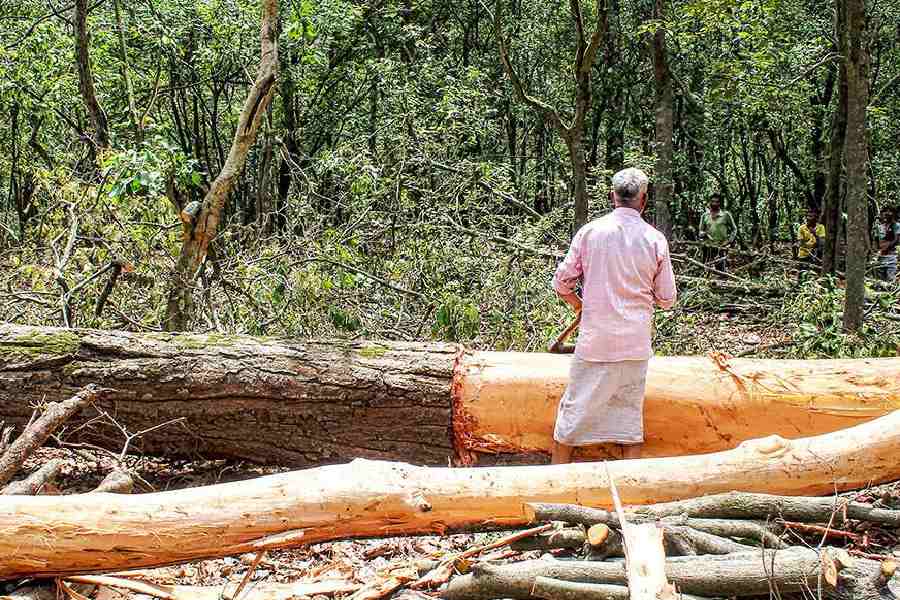
Residents and environmental activists in Uttarakhand are protesting against the proposed felling of more than 4,000 Sal trees for the widening of the Dehradun-Rishikesh National Highway, with demonstrations drawing comparisons to the state’s historic Chipko Movement.
The protests are taking place along the Bhaniyawala-Ranipokhari stretch, a nearly 20-kilometre section of the highway that is being upgraded by the National Highways Authority of India (NHAI). The ₹743 crore project aims to improve connectivity between Dehradun, Jolly Grant Airport and Rishikesh, reduce traffic congestion and facilitate travel during the Char Dham Yatra.
Residents and environmental groups have opposed the large-scale tree felling, arguing that the mature Sal forests are essential for maintaining ecological balance, preserving wildlife habitats and supporting groundwater recharge. Videos circulating on social media show protesters embracing trees, echoing the methods used during the Chipko Movement that began in Uttarakhand in the early 1970s to prevent commercial logging.
NHAI has maintained that the project incorporates several measures to reduce its environmental impact. According to the authority, the right of way through forest sections has been reduced from the standard 60 metres to 23 metres, lowering the number of trees that need to be removed. The Forest Research Institute has also identified 754 trees that could be transplanted during the monsoon season.
The highway project includes additional environmental safeguards such as elephant underpasses, a bridge-cum-elephant underpass, anti-glare screens, sound barriers, wildlife warning signage, no-horn zones and speed-calming measures intended to reduce disturbances to wildlife.
NHAI says the project has received the required statutory and environmental approvals and has been designed to improve regional connectivity while limiting ecological damage. The authority has stated that engineering modifications and wildlife protection measures are intended to strike a balance between infrastructure development and environmental conservation.
The protests continue as residents seek greater protection for the region’s forests, while authorities maintain that the highway project incorporates measures to minimise its environmental footprint.
Source: Financial Express