




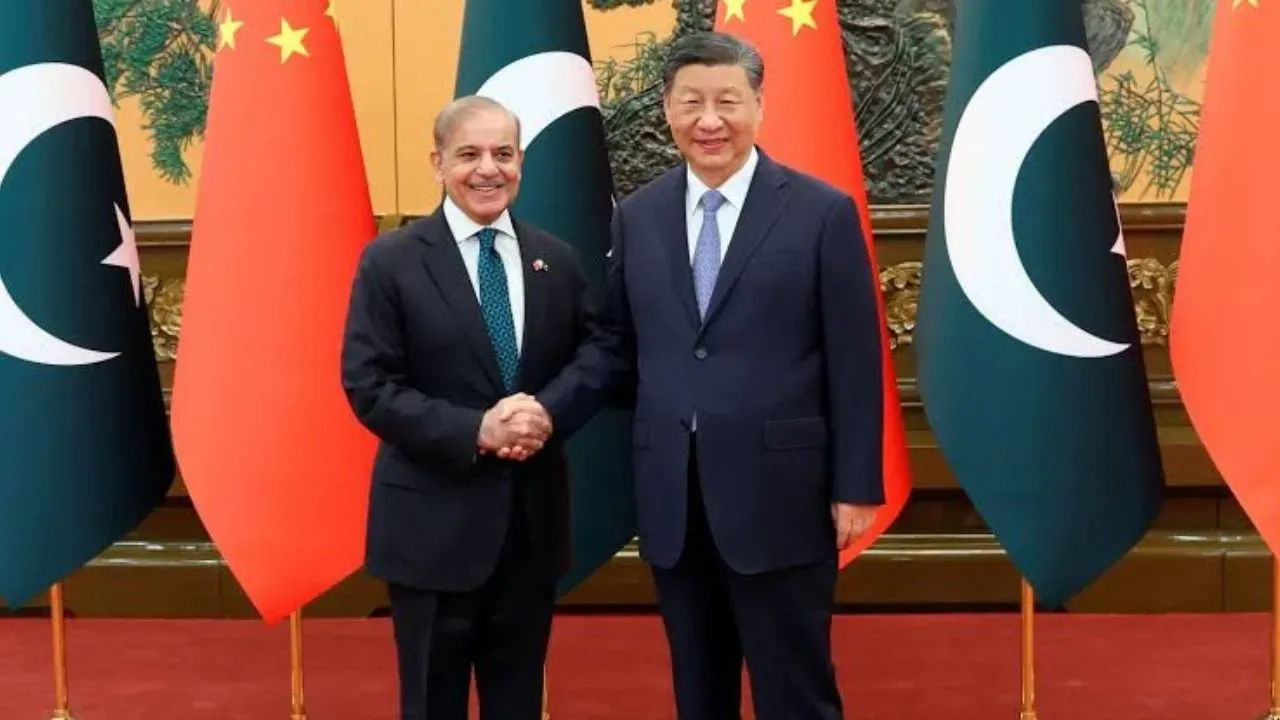
Pakistan and China have formalised a boundary agreement in a disputed part of the Himalayas that India claims as its own, prompting a sharp response from New Delhi.
The two countries signed the Pakistan-China Boundary Joint Commission, which Pakistan described as a significant milestone aimed at deepening cooperation on border management, trade and connectivity. India rejected the move, saying it had no legal basis. Foreign ministry spokesperson Randhir Jaiswal said India does not recognise any Pakistan-China boundary and dismissed the commission as being without legal standing.
The agreement concerns the Pakistan-China frontier, including the Shaksgam Valley, a roughly 5,180 square kilometre tract that Pakistan ceded to China in 1963 but which India claims as part of Ladakh. India maintains the territory was historically part of the former princely state of Jammu and Kashmir and was illegally occupied by Pakistan before being handed to China. New Delhi has never recognised the 1963 agreement and considers it invalid. Pakistan, in turn, argues that since Kashmir remains a disputed territory, India has no standing to challenge its boundary arrangement with China.
Experts describe the move as the revival of an existing mechanism rather than an entirely new arrangement. Jabin T. Jacob of Shiv Nadar University noted that a joint boundary commission was already provided for under the 1963 Sino-Pak Agreement, and that only the timing of its activation is new. He said India should be concerned, particularly since the move appears to disregard a provision in the original treaty for renegotiation once the Kashmir dispute is settled.
Husain Haqqani, a former Pakistani ambassador to the US, said the commission serves both practical and political purposes, helping manage infrastructure tied to the China-Pakistan Economic Corridor while signalling that Beijing continues to view Kashmir through Pakistan’s lens rather than India’s.
Analysts note the timing appears deliberate, coming shortly after President Xi Jinping’s recent BRICS summit trip, reinforcing Pakistan’s strategic partnership with China while reminding India that broader diplomatic engagement does not alter Beijing’s regional posture. Jacob cautioned, however, that the development carries no immediate implications for the Line of Actual Control, suggesting its significance lies more in the gradual institutionalisation of arrangements India has long rejected than in any immediate shift on the ground.
(Source: BBC)