



Thousands of Hyundai workers in South Korea have gone on strike after negotiations with the automaker collapsed over its plans to deploy humanoid robots across its factories. The strike is among the first major worker protests centred on the use of humanoid robots in automotive manufacturing.
The Hyundai Motor union, representing more than 39,000 workers, has been staging partial walkouts at the company’s Ulsan production complex after 15 rounds of negotiations failed to produce an agreement. Workers reduced both day and night shifts by two hours between July 13 and 15 and are expected to escalate to four-hour strikes from July 20 to 22.
The disagreement centres on Hyundai’s plan to deploy more than 25,000 Atlas humanoid robots across Hyundai and Kia factories. The company intends to begin installations at its Metaplant America facility in Georgia in 2028 before expanding deployment more broadly. Atlas is developed by Boston Dynamics, which Hyundai is in the process of making a wholly owned subsidiary.
Unlike conventional industrial robot arms that perform a single programmed task, Atlas is designed as a general-purpose humanoid robot capable of handling multiple manufacturing activities. Hyundai has indicated that the robots will initially focus on sorting and organising automotive parts before taking on more complex assignments.
The union argues that increased automation could reduce workers’ hours and long-term employment opportunities. Among its key demands are converting hourly wages into fixed salaries to reduce the impact of automation on earnings, increasing the retirement age from 60 to 65, and improving worker bonuses.
Hyundai has said the robots are intended to complement rather than replace employees. The company has also committed to employing more than 8,100 full-time workers at its Georgia facility by 2031 under agreements linked to state economic incentives.
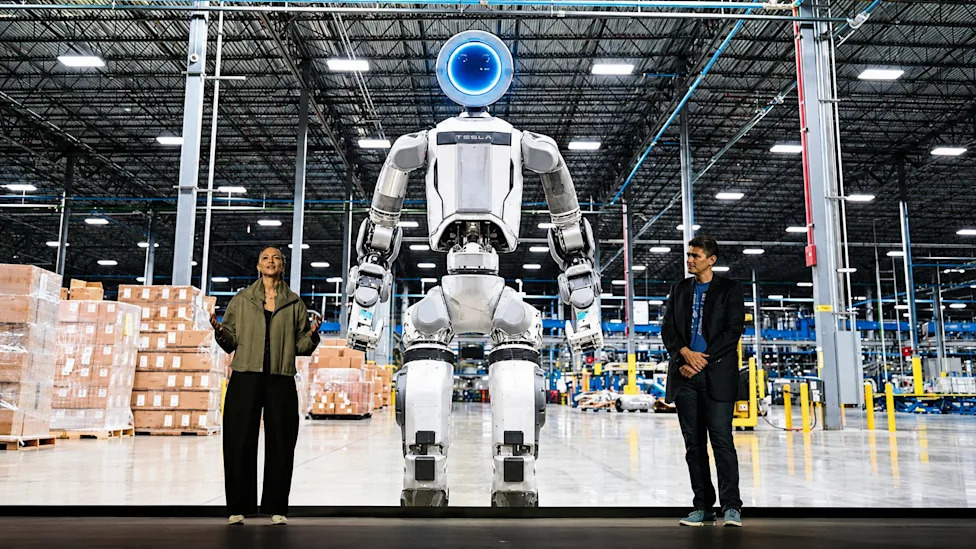
The dispute comes as global automakers accelerate investment in humanoid robotics. Tesla is developing its Optimus robot, BMW has tested Figure AI’s humanoid robots, and several Chinese manufacturers are pursuing similar technologies. While industrial robots have been used in automotive production for decades, the arrival of humanoid robots is introducing new questions about workforce planning, labour agreements and the future relationship between human workers and increasingly capable machines.
Source: ARS Technica