



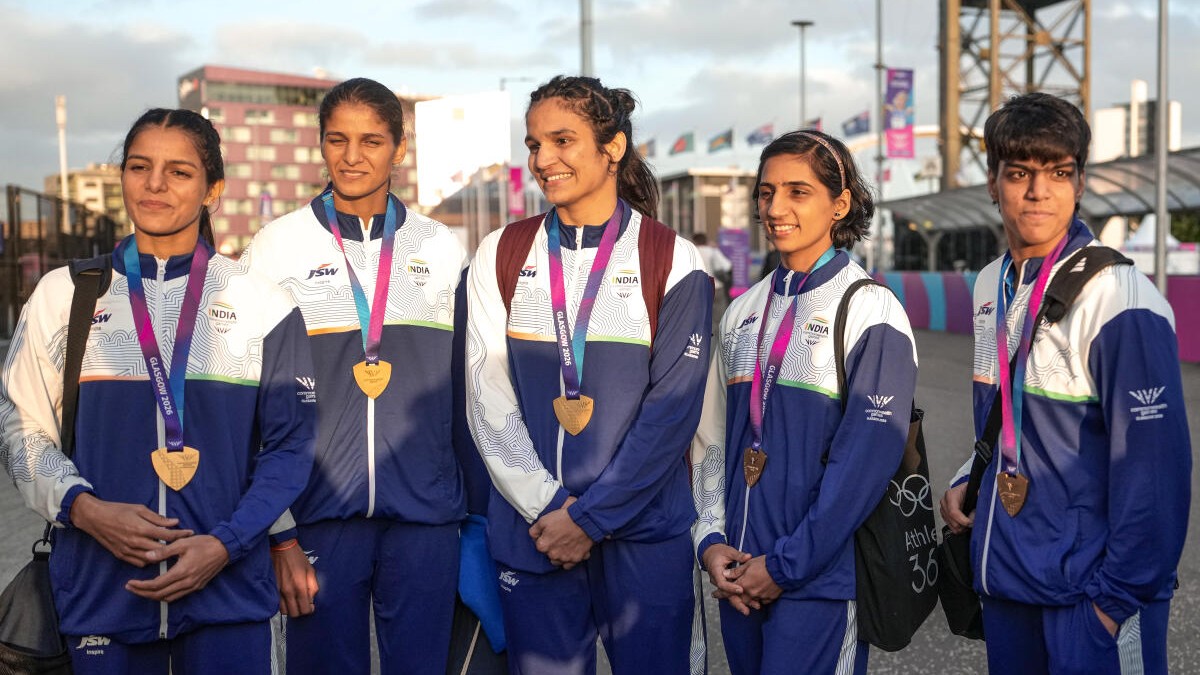
When India’s national anthem was played in Glasgow, it was often the country’s women standing atop the podium. They won eight of India’s 13 gold medals, leading the nation’s campaign and underlining how women’s sport has become one of India’s biggest strengths on the international stage.
The gold medals came across multiple disciplines. Mirabai Chanu once again delivered in weightlifting, Asmita Dey created history in judo, Sharmila Dhankar topped the podium in para athletics, while India’s women boxers dominated the ring with five gold medals. It was not the success of one athlete or one sport. It reflected the growing depth of women’s sport in India.
Indian Olympic Association president PT Usha, herself a pioneer for women’s athletics, said the performances would inspire the next generation.
Their success was built on years of sacrifice. Behind the medals were journeys that rarely followed an easy path. Many of India’s women athletes have emerged from small towns and modest backgrounds, relying on perseverance rather than privilege to reach the biggest stages.
A new benchmark for Indian sport
India’s boxing contingent summed up that progress. Preeti Pawar, Jaismine Lamboria, Sakshi Chaudhary, Priya Ghanghas and Arundhati Choudhary all won gold, highlighting the depth the country has built in women’s boxing.
Alongside Mirabai Chanu, Asmita Dey and Sharmila Dhankar, they ensured women accounted for more than 60 per cent of India’s gold-medal haul.
There was a time when an Indian woman winning gold at a major international event was celebrated as an exception. Glasgow suggested that expectation has changed. Across sports, Indian women are no longer simply competing for medals. They are among the favourites to win them.
The medal tally will remember that eight of India’s 13 gold medals came from women. The stories behind those medals reveal something even more significant: Indian women’s sport continues to grow stronger, deeper and more successful with every major event.