




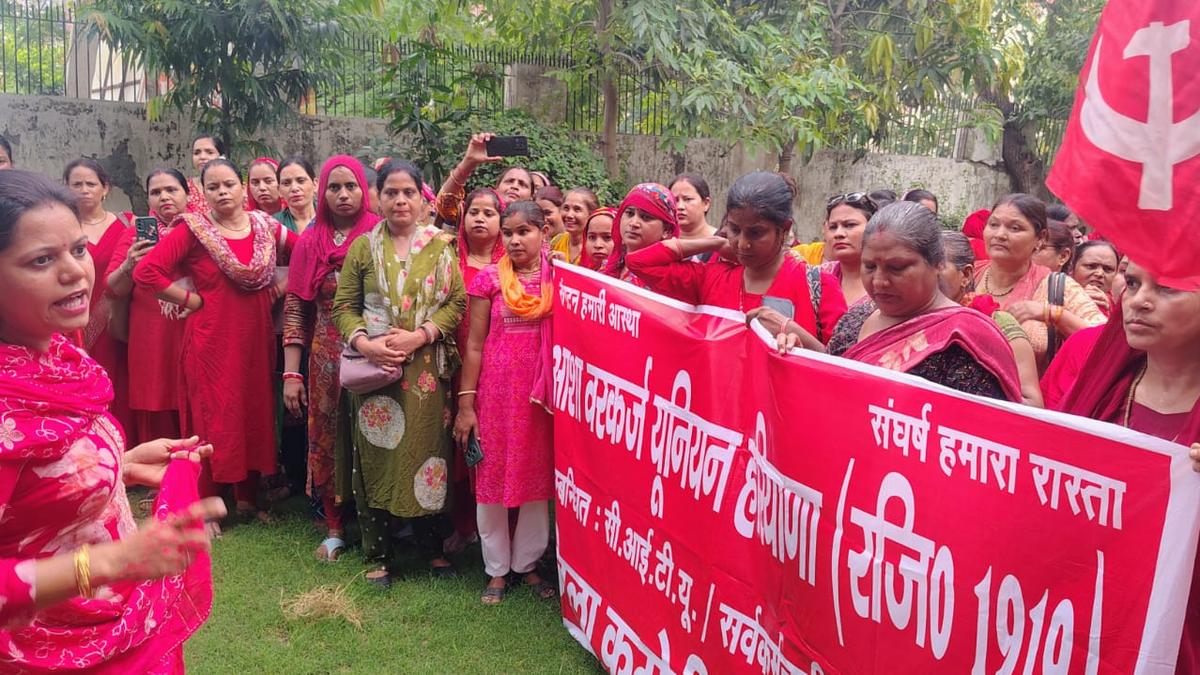
ASHA workers across Haryana have launched protests demanding better pay and permanent employment contracts, according to The Hindu. ASHA, short for Accredited Social Health Activists, are frontline health workers stationed in villages and small towns who connect families to government health services. They track pregnancies, conduct immunisations, monitor disease outbreaks, and refer patients to hospitals. Despite this critical role, ASHA workers in Haryana earn between 4000 and 6000 rupees monthly, roughly what an unskilled labourer earns in urban areas.
The protest centres on two main issues. First, wages have remained flat for years while living costs have climbed, making it difficult for many workers to support themselves or their families. Second, ASHA workers are hired on temporary contracts renewed month to month or year to year, meaning they have no job security, no pension, and no provident fund despite decades of service. Some workers have completed 15 to 20 years with the government without ever becoming permanent staff, a status that would guarantee tenure and benefits.
Haryana has approximately 40,000 ASHA workers spread across rural and semi-urban areas. Their work is foundational to India’s public health system. When immunisation campaigns launch, ASHA workers mobilise families in their villages. When outbreak surveillance data is needed, they provide it. When pregnant women are at risk, they flag it. Yet they operate on wages and terms comparable to temporary retail workers, not professionals responsible for population health.
This protest is not unique to Haryana. Similar actions by ASHA workers have erupted in Maharashtra, Jharkhand, and Chhattisgarh over the past two years. Some state governments have responded with small wage increases or promises of permanent status on extended timelines. Most responses have been incremental and slow. The Haryana government has not yet formally addressed these specific demands.
The larger issue is systemic. India’s health system relies on a massive workforce of underpaid, unprotected workers to function. When these workers cannot earn enough to live or lack basic job security, they eventually leave. Recruitment and training gaps follow, service coverage declines, and health outcomes suffer, particularly in maternal and child health. The ASHA worker protest in Haryana signals that this model is unsustainable. Addressing their demands for fair wages and permanent employment is not charity. It is necessary investment in public health infrastructure that serves ordinary Indians.
Source: The Hindu