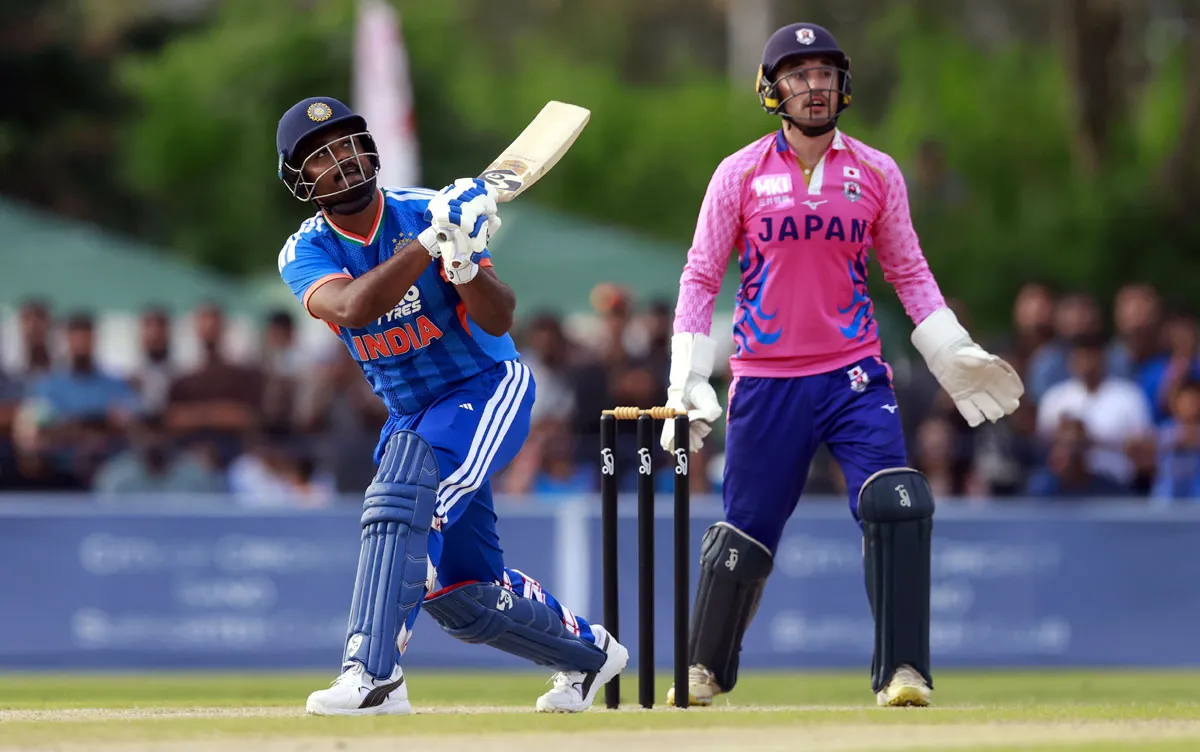




India was four balls away from suffering one of the most unexpected defeats in their T20I history when a controversial umpiring decision added another twist to a remarkable contest against Japan in Sano.
Defending just 32 in 5 overs, India entered the final over with Japan needing eight runs from six balls. Shreyas Iyer handed the ball to Axar Patel, who had the responsibility of protecting India’s narrow lead after Japan had kept the chase alive despite being set a modest target in the rain-shortened game. India eventually won by two runs, with Japan finishing on 30/3.
The drama began with Japan needing six from four deliveries. Axar bowled down the leg side and the delivery was called wide, reducing the target to five from four.
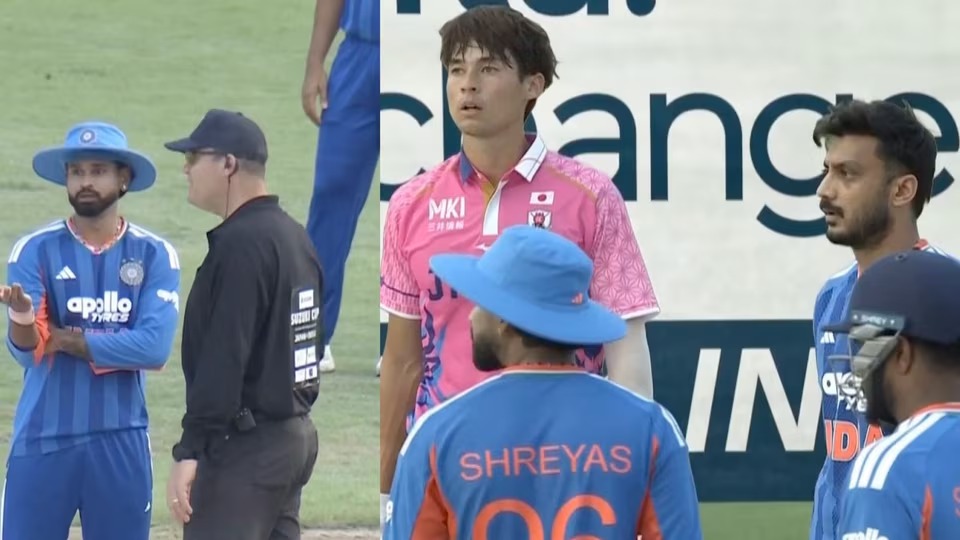
The next ball created even greater confusion. With left-hander Alexander Shirai Patmore appearing to prepare for a reverse sweep, Axar changed his line and bowled another delivery down the leg side. Umpire Chris Thurgate initially called it a wide.
Axar immediately protested the decision, while Iyer also approached the umpire for a discussion. With no third umpire or DRS available for the contest, India had no formal review option. After the conversation, however, the on-field officials reversed the decision and the delivery was deemed legal.
That changed the equation dramatically. Instead of Japan needing five from four balls, they were left requiring six from three.
Axar then held his nerve. Japan could manage only four more runs from the remaining deliveries, allowing India to escape with a two-run victory in a match that had appeared far more straightforward on paper.
The result was India’s 200th T20I victory, but the manner of it overshadowed the milestone. Japan had restricted India to 32/4 after rain reduced the match to five overs per side, with their spinners making life difficult for a batting line-up containing several established Indian internationals.
Japan’s chase then threatened to produce a historic upset. They needed only 33, and India were forced to rely on a tense final over to prevent the hosts from completing a result that would have dominated the headlines.
For Iyer, Axar and India, the win provides relief more than satisfaction. The narrow escape came immediately before India’s Asian Games campaign, with the men’s team beginning its tournament on September 28.
For Japan, meanwhile, the performance offered further evidence of their progress, even though the biggest result of their cricketing journey remained just out of reach.