




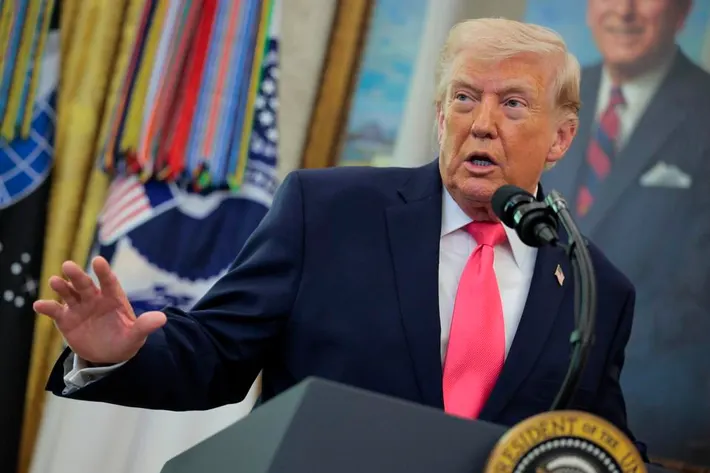
US President Donald Trump has warned Iran it will face severe consequences if it does not keep the Hormuz Strait open to shipping in the near future. The threat comes as oil prices have begun falling, signalling that markets are responding to signs of potential progress in resolving the issue. US Secretary of State Marco Rubio and Treasury Secretary Scott Bessent both announced this week that talks have advanced to allow shipments to resume through the strait, though neither provided specific details about the negotiations.
The Hormuz Strait is one of the world’s most critical shipping routes, lying between Iran and Oman. Roughly 30 percent of all globally traded oil passes through this narrow waterway, making any disruption to traffic potentially catastrophic for energy supplies worldwide. When traders become uncertain about whether oil will flow smoothly through the strait, they typically push prices higher in response to the perceived risk. The recent fall in oil prices suggests markets now view the risk of a serious disruption as lower than before.
For ordinary Indians, global oil price movements have direct consequences. Higher international oil prices translate into higher prices at the petrol pump, which in turn affects transport costs, food prices, and the cost of manufactured goods. India imports roughly 85 percent of its oil from abroad, making the country particularly vulnerable to disruptions in global oil supply and price swings. The stability of the Hormuz Strait therefore has immediate economic relevance for Indian households and businesses.
The Hormuz Strait has been a recurring point of tension between the US and Iran over the past two decades. Previous disputes over Iran’s nuclear programme and international sanctions have sometimes led to concerns that Iran might block the waterway, though it has not done so. Tensions have periodically spiked when either the US or Iran has taken aggressive actions or rhetoric in the region.
Trump’s public threat combined with ongoing diplomatic talks suggests the administration is pursuing a strategy of applying pressure while simultaneously negotiating. The success or failure of these talks will likely determine whether global oil supplies remain stable or face new disruptions over the coming months. Markets are currently pricing in the assumption that talks will succeed, but any breakdown in negotiations could quickly reverse the recent decline in oil prices and create uncertainty for global energy supplies.
Source: BBC World News