



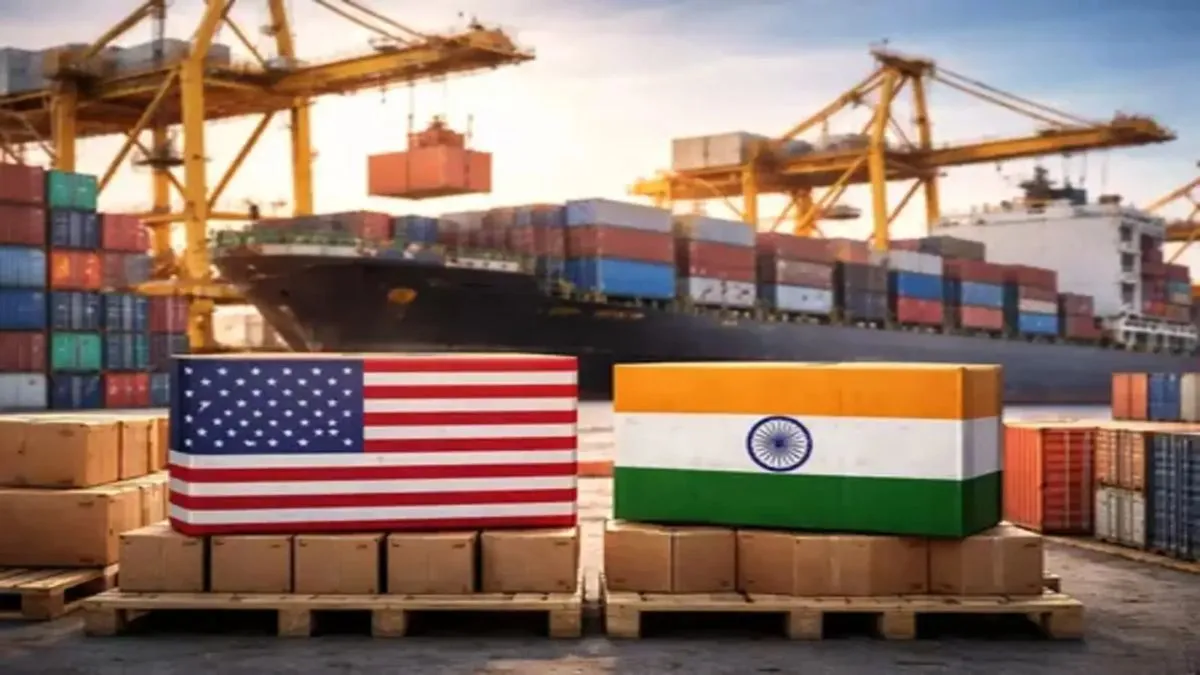
The United States has imposed a 10% tariff on Indian exports under its revised Section 301 framework targeting goods linked to forced labour, placing India in the second tier of a new trade architecture that differentiates countries based on labour standards and existing trade policies.
The duty, which took effect on Friday, is lower than the 12.5% tariff proposed in March. The Office of the United States Trade Representative (USTR) said the reduction reflected several factors, including India’s decision to prohibit imports produced using forced labour through a notification issued by the Directorate General of Foreign Trade during ongoing trade negotiations with Washington.
Forced labour refers to work performed under coercion, threats, debt bondage or other forms of exploitation where workers cannot freely leave their jobs. The US has increasingly used trade measures to discourage imports linked to such practices, arguing that goods produced through forced labour benefit from artificially lower production costs and create unfair competition for businesses that comply with labour standards.
Under the revised framework, India joins countries including the United Kingdom, Canada, Malaysia, Indonesia and Pakistan, all of which face a standard 10% tariff. The European Union and Taiwan secured the most favourable treatment, while China, Vietnam, Brazil, Russia, Australia, Saudi Arabia and the Philippines remain in the highest tariff category with duties of up to 12.5%.
The changes could also affect India’s position in the textile sector. Bangladesh, Cambodia, Indonesia and Malaysia have received textile tariff-rate quotas allowing a specified volume of apparel exports to enter the US without the additional Section 301 tariff for the next three years. India has not received a similar arrangement, potentially strengthening the competitive position of some rival exporters.
At the same time, the USTR has exempted several categories of products from the additional tariffs. Pharmaceuticals and pharmaceutical ingredients, aircraft components, semiconductor manufacturing equipment, fertiliser inputs, selected agricultural products, industrial raw materials and certain medical equipment are among the items excluded from the new duties.
The revised tariff structure signals that labour standards are becoming a more prominent feature of US trade policy. Alongside pricing and product quality, exporters seeking access to the American market may increasingly have to demonstrate that their supply chains are free from forced labour, making compliance an increasingly important factor in international trade.