




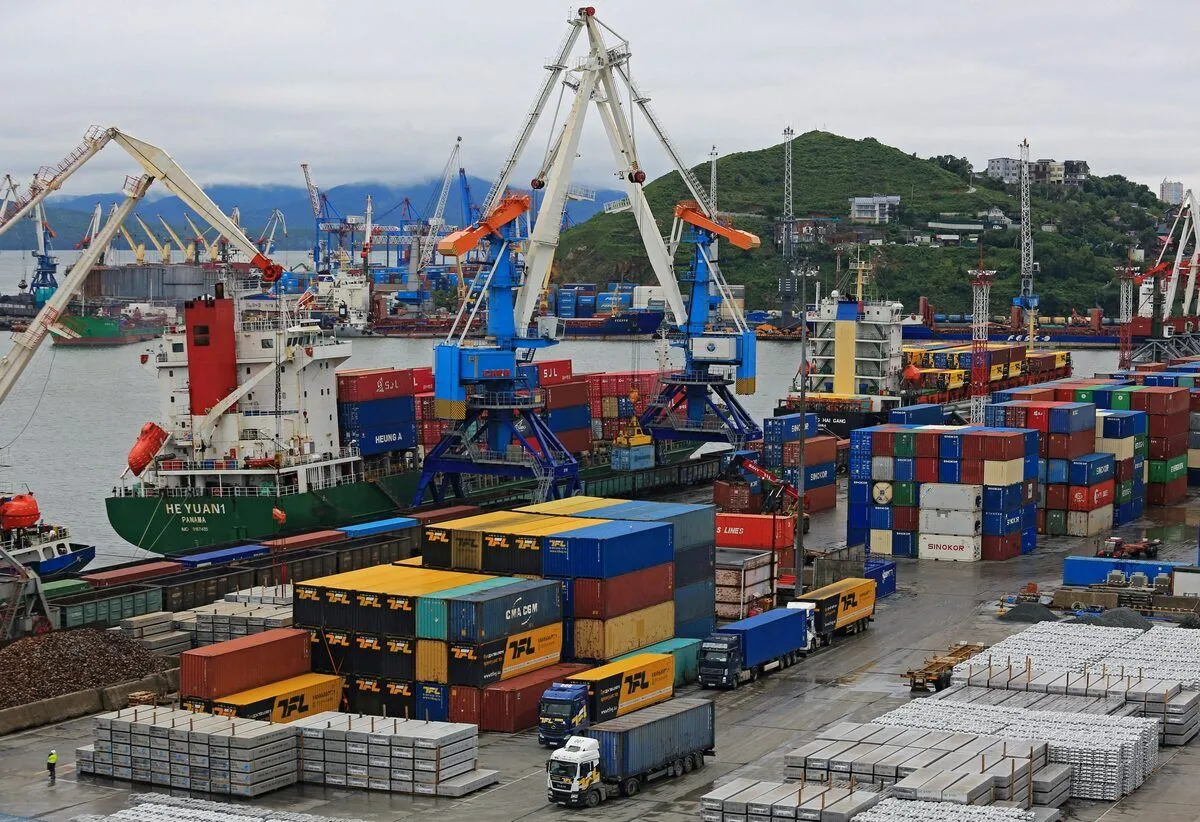
The United States has accused more than 40 countries, including India, of being part of what it called a “shadow trans-shipment network” that helps China avoid steep American tariffs. The accusation comes from a report titled “The Great Transshipment Scam,” released by Peter Navarro, President Donald Trump’s top trade adviser. Officials also outlined plans to deploy artificial intelligence to identify and act on such shipments, PTI reported.
The report estimates the value of Chinese goods rerouted through third countries each year at between $40 billion and $303 billion, depending on how the figure is calculated. Navarro said the practice grew more common after 2018, when the Trump administration first placed Section 301 tariffs on China over trade practices it considered unfair. He described the arrangement as letting China “launder its exports” through more than 40 nations. The countries named include several of America’s largest trading partners, from Mexico and Canada to the European Union, Japan and South Korea.
According to the report, Chinese goods are passed through other countries for light processing, relabelling, repackaging, reinvoicing or a change of shipping route, creating the appearance of a different country of origin while the products remain largely Chinese in content. Chinese manufacturers and trading firms target countries with low labour costs, limited customs oversight, relaxed free-trade zones or favourable access to the US market. The report specifically named India’s Pune-Gujarat-Chennai manufacturing belt, saying it absorbs Chinese-made pumps and compressors that would otherwise affect supply chains in Cincinnati, Dayton and Columbus in the United States.
Washington plans to deploy an AI system called “Detective Border” to identify goods that reach the US after passing through third countries. The system is expected to draw on shipment records, routing history, product classification, ownership links, production capacity, anomaly detection and computer vision. Its stated aim is to help US Customs and Border Protection distinguish legitimate nearshoring and foreign investment from illegal pass-through trade, flag high-risk shipments, and turn findings into enforcement steps such as duty collection, penalties and exclusion orders.
Source: Indian Express