



India’s car insurance industry is grappling with a fundamental transparency problem that affects millions of vehicle owners. Insurance companies have quietly shifted their position on E20 fuel use in older cars, but the change masks a deeper coverage problem buried in policy fine print.
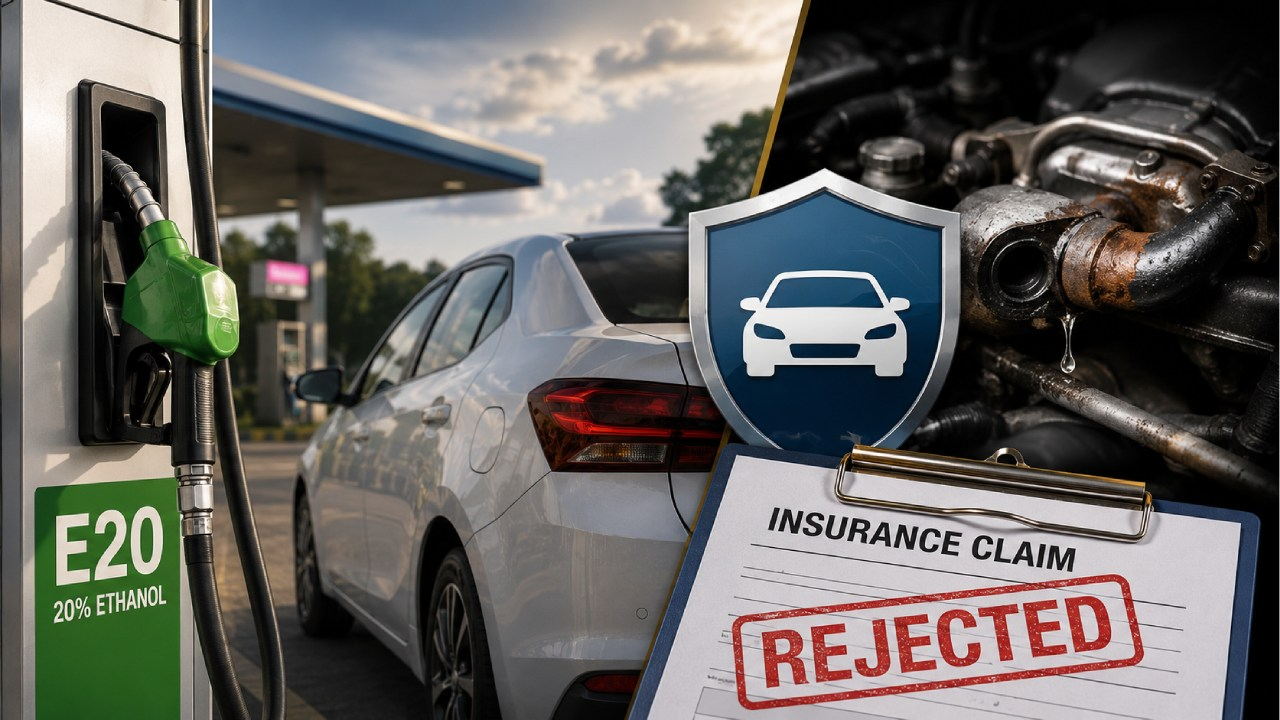
E20 is a petrol blend containing 20 percent ethanol, introduced by the Indian government in 2021 as part of its fuel policy. The government promoted E20 to reduce oil imports and lower emissions. However, E20 poses compatibility problems for cars manufactured before 2023, which were engineered for traditional petrol with only 10 percent ethanol or less.
When E20 fuel became widespread, insurance companies took a hard stance. They began classifying claims for damage caused by E20 in non-compatible vehicles as arising from negligence. Under insurance law, negligence means the policyholder caused the problem through careless action, which insurers can use to reject claims entirely. This created immediate friction. Thousands of car owners using E20 — the fuel readily available at government-promoted pumps — found their claims denied.
Consumer complaints mounted. Insurance regulators began receiving inquiries and formal grievances. Consumer advocacy groups highlighted the contradiction: how could using government-promoted fuel at government-sanctioned pumps count as negligence? The pressure forced a change. According to recent reports, private insurers have now backtracked from this position. They are no longer automatically labeling E20 usage in pre-2023 vehicles as negligence.
But this apparent victory masks a structural problem. While insurers retreated from the negligence angle, they have not expanded coverage. Instead, their policies contain longstanding exclusion clauses for chemical corrosion damage and consequential damage. These clauses exist in nearly all standard car insurance policies sold across India. They are written in technical language and buried in the terms and conditions most people never read.
Here’s how it works in practice. A car owner with a 2020 petrol vehicle fills up E20 fuel, as it is sold widely and promoted by the government. Over months, ethanol in the fuel corrodes the fuel injectors and fuel tank. The engine starts misfiring. The owner files an insurance claim for the damage. The insurer now cannot deny it on negligence grounds. Instead, they point to the exclusion clause that says the policy does not cover “chemical corrosion of engine components” or “consequential damage resulting from fuel system degradation.” The claim is rejected.
The car owner is left without coverage despite paying premiums. The insurer deflects responsibility by citing fine print. The government’s fuel policy sits separate from the insurance framework. No one institution is accountable for the gap.
This situation reveals how financial protection in India can fail ordinary people even when it appears to exist on paper. Millions of car owners purchased insurance policies without understanding what they actually cover. Insurance companies designed their products before E20 became mainstream. Rather than transparently updating policies to address the new fuel’s known risks, insurers maintained old exclusion clauses and simply stopped using one legal argument to deny claims.
Regulatory bodies are now examining whether these exclusions constitute fair insurance practice. The debate centers on whether companies should be required to explicitly flag corrosion exclusions to buyers, or whether existing written clauses are sufficient disclosure. Consumer advocates argue that when government policy creates widespread use of a particular fuel, insurance should adapt visibly and fairly. Insurance companies maintain that exclusion clauses have been standard for decades and apply uniformly.
The outcome of this regulatory discussion will set precedent for how financial services adapt when government policy and private coverage frameworks misalign. For now, millions of Indian car owners remain in an uncomfortable position: using fuel the government promotes, holding insurance they believe protects them, yet discovering that gap between assumption and actual coverage when they need it most.
Source: Business League