



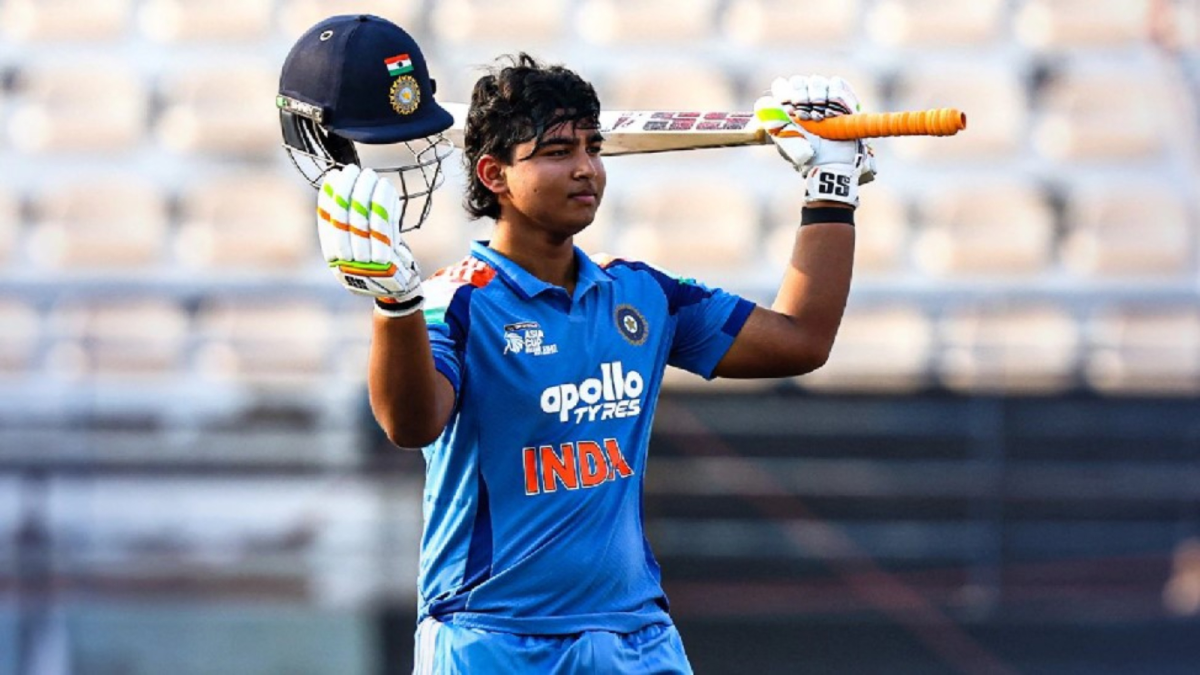
India’s 15-year-old batting sensation Vaibhav Sooryavanshi has announced himself as one of the country’s brightest young talents, but his first international series has also revealed an area opponents are likely to target repeatedly.
Ahead of the fourth T20I against England, former India wicketkeeper-batter Parthiv Patel believes bowlers have already identified a clear method to trouble the young opener: sustained short-pitched bowling.
Sooryavanshi has shown glimpses of his explosive strokeplay since making his debut, scoring 14 off 10 balls in the second T20I and 13 off five deliveries in the third. However, both innings were cut short after England attacked him with pace and bounce.
That strategy is unlikely to change anytime soon.
A clear plan from England
England’s fast bowlers have consistently tested Sooryavanshi with short deliveries, forcing him to take on aggressive shots early in his innings.
This approach isn’t new. Opposition teams had already begun exploring the tactic during the IPL, and England have simply carried it into international cricket.
As a naturally attacking batter, Sooryavanshi likes to dominate bowlers from the outset. While that fearless approach has brought him success, it also encourages opponents to challenge him with extra pace and bounce before he settles at the crease.
Learning to adapt
For Sooryavanshi, the challenge now is adding another dimension to his batting style.
The ability to leave, evade or control the short ball has long separated talented young batters from established international performers. Every promising batter goes through a period where bowlers search for weaknesses, and how quickly they respond often determines their long-term success.
At just 15, Sooryavanshi has plenty of time to develop those skills.
India also needs greater awareness
Following India’s collapse for 76 in the third T20I, their lowest T20I total against England and second-lowest overall, the batting unit must show better game awareness in English conditions.
India’s aggressive approach has come under scrutiny after a string of batting failures on seamer-friendly pitches. Rather than looking for boundaries from the outset, the batters need to assess conditions better before launching into attacking strokes.
A chance to respond
The fourth T20I presents an opportunity for both India and Sooryavanshi.
India needs a victory to keep the series alive, while the teenage opener has another chance to demonstrate that he can adapt to the challenge England have placed before him.
International cricket is built on constant adjustments. Bowlers identify weaknesses, and batters evolve to counter them. For Sooryavanshi, that process has begun earlier than most. How quickly he responds could shape the next phase of his promising career.