



The 2026 FIFA World Cup has once again put the Video Assistant Referee, better known as VAR, under the spotlight.
The latest controversy followed Argentina’s dramatic Round of 16 victory over Egypt. The Egyptian Football Association has since lodged a formal protest with FIFA, questioning several refereeing and VAR decisions during the match. FIFA has defended the match officials, but the incident has once again revived a familiar question: if VAR was introduced to reduce refereeing mistakes, why does it continue to generate so much debate?
The answer lies in what VAR can do and, just as importantly, what it cannot.
For most of football’s history, referees had only seconds to judge incidents that could define careers, championships and even World Cups. Some of the sport’s most famous controversies stemmed from those moments. Diego Maradona’s “Hand of God” goal against England in 1986 remains one of football’s most debated incidents because the referee failed to spot the handball. More than two decades later, Frank Lampard’s shot against Germany in the 2010 FIFA World Cup clearly crossed the goal line but was not awarded. Incidents like these strengthened calls for technology to assist referees.
Following years of testing, FIFA introduced VAR at the 2018 FIFA World Cup in Russia.
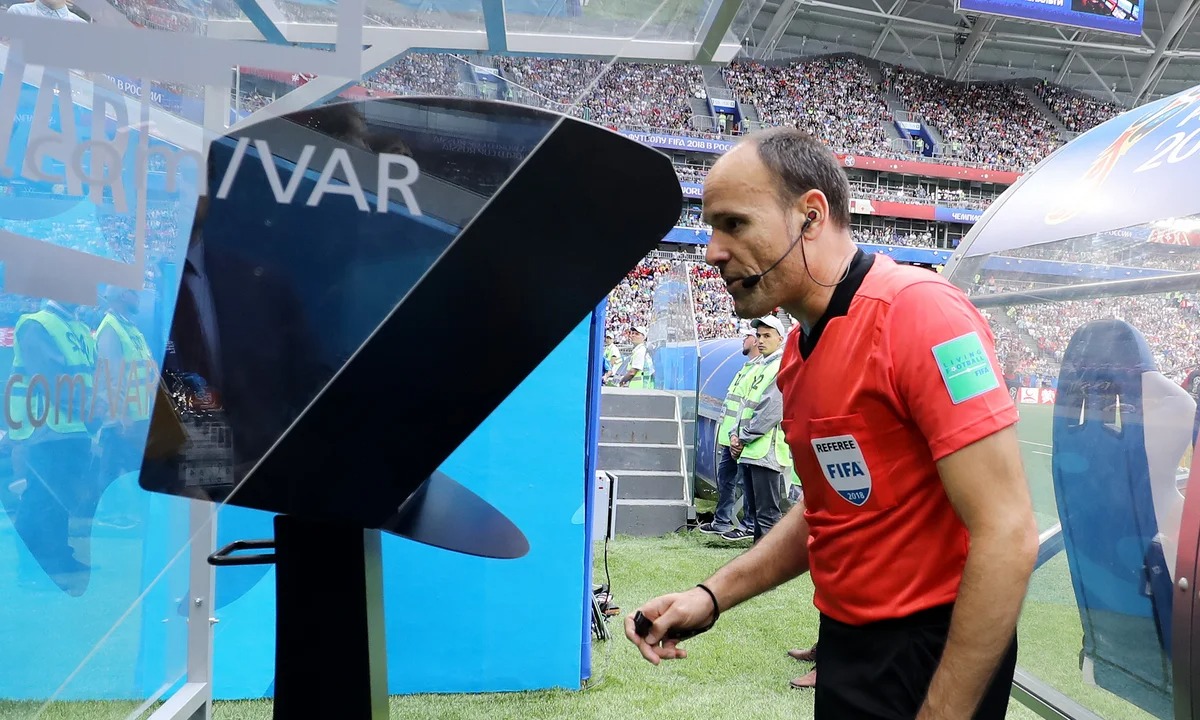
Despite common perception, VAR is not designed to review every decision made during a match. It is restricted to four categories: goals and any attacking offence leading up to them, penalty decisions, direct red cards and cases of mistaken identity. A team of video officials monitors the match from a dedicated operations room using multiple camera angles. If they identify what they believe is a clear and obvious error or a serious missed incident, they recommend a review. The referee can then either accept the advice or review the footage on the pitch-side monitor before making the final decision.
Supporters believe the system has significantly improved refereeing by correcting mistakes that once had no remedy. Incorrect penalties can be overturned, offside goals can be ruled out and wrongful dismissals can be reversed before they influence the final result. FIFA has repeatedly maintained that VAR has improved the accuracy of refereeing decisions at major tournaments.
Yet the criticism has never disappeared.
Unlike goal-line technology, which answers a simple factual question, many VAR reviews involve interpretation. Whether a tackle is reckless, whether a handball is deliberate or whether enough contact exists to award a penalty often remains a matter of judgement. Different referees can examine the same footage and still arrive at different conclusions.
Offside decisions have become another source of frustration. Advances in camera technology allow officials to identify whether a player’s shoulder, knee or boot is marginally ahead of the last defender. While these decisions may be technically correct under the Laws of the Game, many fans argue that winning or losing a match because of a few centimetres goes against football’s spirit.
The pace of the game has also changed. Goals that once triggered immediate celebrations are now followed by moments of uncertainty while officials complete their review. Managers, players and supporters often find themselves waiting before knowing whether the moment will stand.
The controversy surrounding Egypt’s protest shows that football’s debate over VAR is no longer about whether technology belongs in the sport. Most major competitions have already accepted that reality.
The bigger question today is whether technology can ever remove controversy from a game built on interpretation, emotion and human judgement.
Nearly a decade after its introduction, VAR has undoubtedly made football more accurate.
Whether it has made football any less controversial remains a question the sport is still trying to answer.