



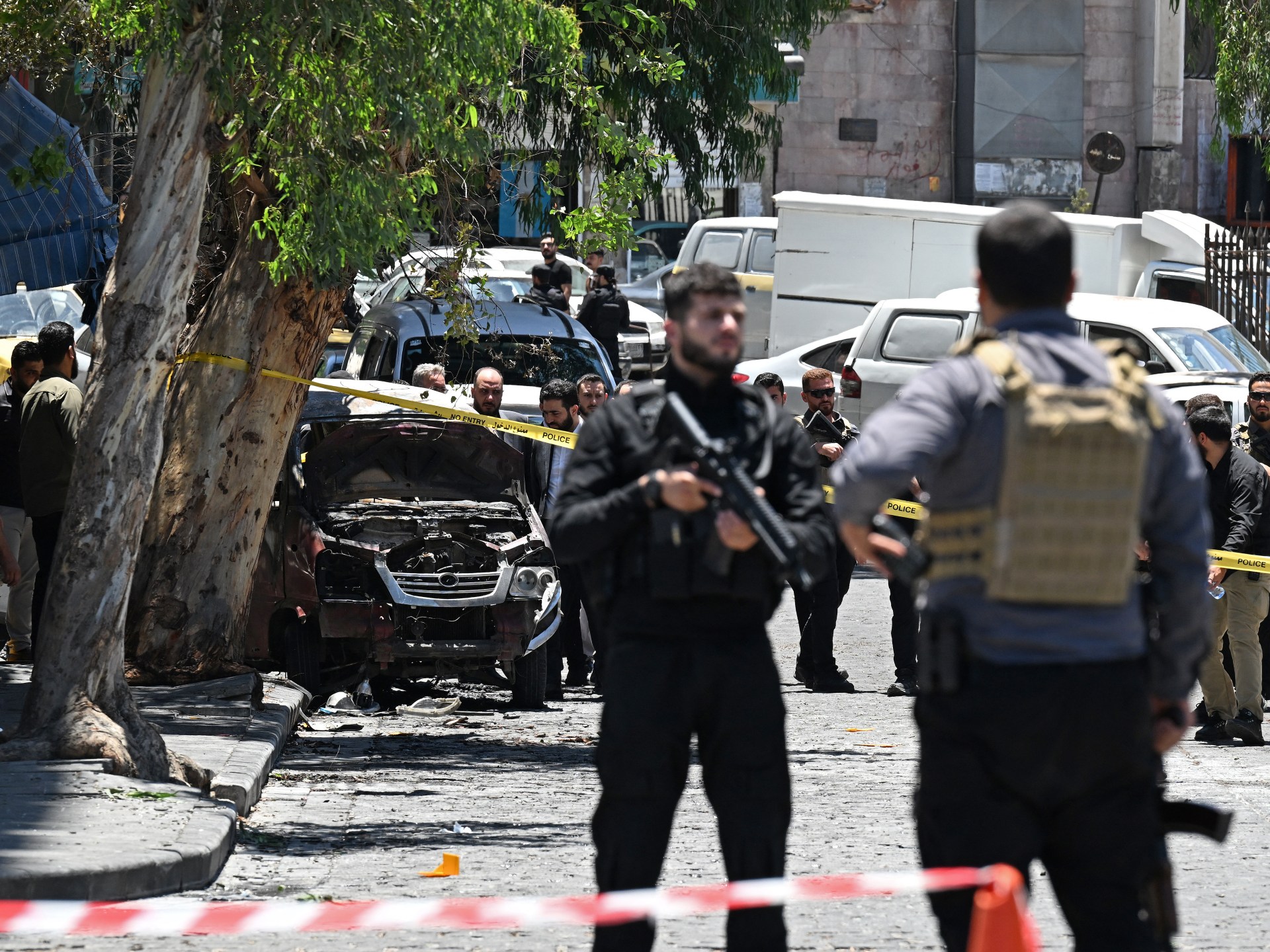
Syria’s capital Damascus was hit by two explosions on Tuesday while French President Emmanuel Macron was visiting the country, marking a sharp escalation in security threats facing the Syrian government. The blasts occurred in different parts of the city, killing at least 18 people and wounding dozens more. Syrian state media blamed the attacks on what it called terrorist groups, though no organization immediately claimed responsibility. The timing of the explosions during Macron’s high-profile visit underscored how vulnerable Syria remains despite more than a decade since the country’s civil war began.
Damascus has faced periodic attacks over the past months, but the dual nature of Tuesday’s bombings signals a shift in the threat landscape. The Syrian government, which has been rebuilding international relations and seeking to rejoin Arab League structures, now confronts both entrenched militant groups and the challenge of securing major cities. Macron’s visit was intended to signal France’s renewed engagement with Syria on humanitarian grounds, but the attacks demonstrated that stability remains far from certain. Security experts point to multiple active insurgent networks operating in Syria, particularly in rural areas and former opposition strongholds that remain outside complete government control.
The instability reflects Syria’s broader vulnerabilities. While the Assad government has regained territorial control of most major population centers, it has not fully consolidated security across the country. Economic collapse, displacement of millions, and the presence of various armed groups continue to destabilize daily life. Reconstruction efforts have stalled due to international sanctions and lack of funding. The attacks also highlight how difficult it remains for Syria to attract foreign investment or support, even as some nations consider normalizing relations.
The explosions are likely to complicate Syria’s diplomatic efforts. Arab countries have begun cautiously re-engaging with Damascus, but security concerns could slow this process. Turkey continues military operations in northern Syria against Kurdish forces it considers linked to terrorists. Meanwhile, the United States and European nations maintain military presence or influence in parts of the country. For ordinary Syrians, already exhausted by more than a decade of conflict, the attacks signal that the violence and instability that defined the civil war have not fully ended, even if large-scale fighting has subsided.
Syrian authorities have launched investigations and promised to tighten security. How quickly the government can restore public confidence and contain these threats will shape whether the fragile calm of recent years can hold.