



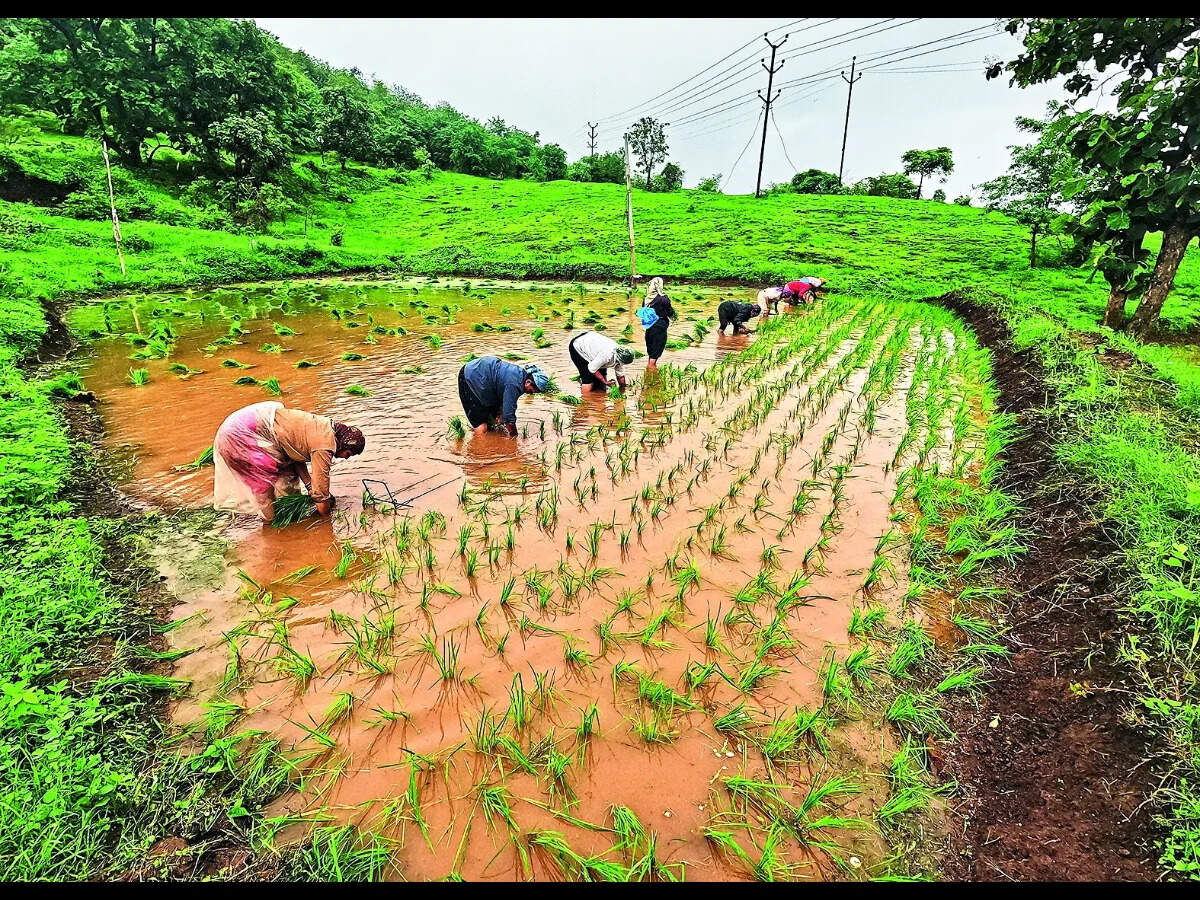
India’s kharif (monsoon) crop sowing has gained momentum in recent weeks, but new data shows farmers are still planting significantly less than they did a year ago. According to the agriculture ministry, kharif sowing stands 21 percent below last year’s levels at the same point in the growing season. The shortfall is spread across major crops including rice, cotton, and pulses across states like Maharashtra, Karnataka, and parts of central India.
The slowdown matters because kharif is India’s primary growing season, feeding millions of households and supplying raw material to industries. Reduced sowing now signals lower harvest expectations later in the year, which could push food prices higher at a time when inflation is already squeezing household budgets. It also affects farmers’ incomes directly, since less planting means less crop to sell.
Why are farmers planting less? The first reason is delayed monsoon rains. Many regions received below-normal rainfall in June and early July, making soil too dry to sow seeds. Farmers typically wait for consistent moisture before committing seeds to the ground, because dry soil means wasted seed and failed germination. The second reason is groundwater levels. In drought-prone states like Maharashtra and Karnataka, water tables have dropped sharply due to successive poor monsoons in previous years. Farmers without irrigation are hesitant to plant if they cannot guarantee water for their crops through the season.
A third factor is seed and input costs. Fertiliser prices remain elevated, and seeds for certain crops cost more than last year. Some farmers are choosing to plant less, or switching to cheaper crops, to reduce their total expense. This calculation is especially common among small farmers operating on thin margins.
Government officials say sowing will accelerate as monsoon rains pick up in August and September, which is typical for the season. However, even if sowing catches up to last year’s numbers, the damage to yield may already be done. Late planting often means shorter growing periods and reduced harvest quality. If production does fall short, India may need to increase imports or allow food prices to rise. The ministry will release updated numbers every two weeks, so the full picture of this season’s output will become clearer by late August.